Mindset Shifts That Helped Me Become Fluent in French

The best English student I had in France had never traveled outside of France. He had never even visited the capital city, Paris (to be fair, I have never seen the White House). Yet his spoken English sounded like he had grown up in Ohio. How was this possible?
The answer: by watching hundreds of undubbed sitcoms, particularly Friends, on repeat.
I remember a co-worker sharing her experience at Middlebury language school in Vermont. Students pledge to avoid speaking English for seven to eight weeks, promising to not use phones to communicate in English with the outside world. Mornings were filled with courses in her chosen language (in this case, Arabic), followed by lunch with other students, afternoon activities in Arabic, and lectures of films in Arabic each evening, followed by dinner with her peers.
What if we could apply Middlebury’s immersive method to language learning in our everyday lives? While other life commitments make it difficult for most to disappear into an intensive language boot camp for eight weeks, we can surely borrow the spirit of language immersion in our everyday routines.
Pursue a language for you, and for you alone


This seems like a no brainer, but truly wanting to learn a language, or any subject for that matter, is easier when it’s not being forced upon you- when training to be a doctor or lawyer ignites your soul, rather than a personal war inside your mind to make someone else proud. Not to be dramatic, but you are about to embark on a journey that will take perhaps years, if not the rest of your life! Like a marriage, make sure that the language isn’t just something that briefly turns you on, but is rather a lasting partnership that will carry you through tough times.
Practice thinking in your language of choice
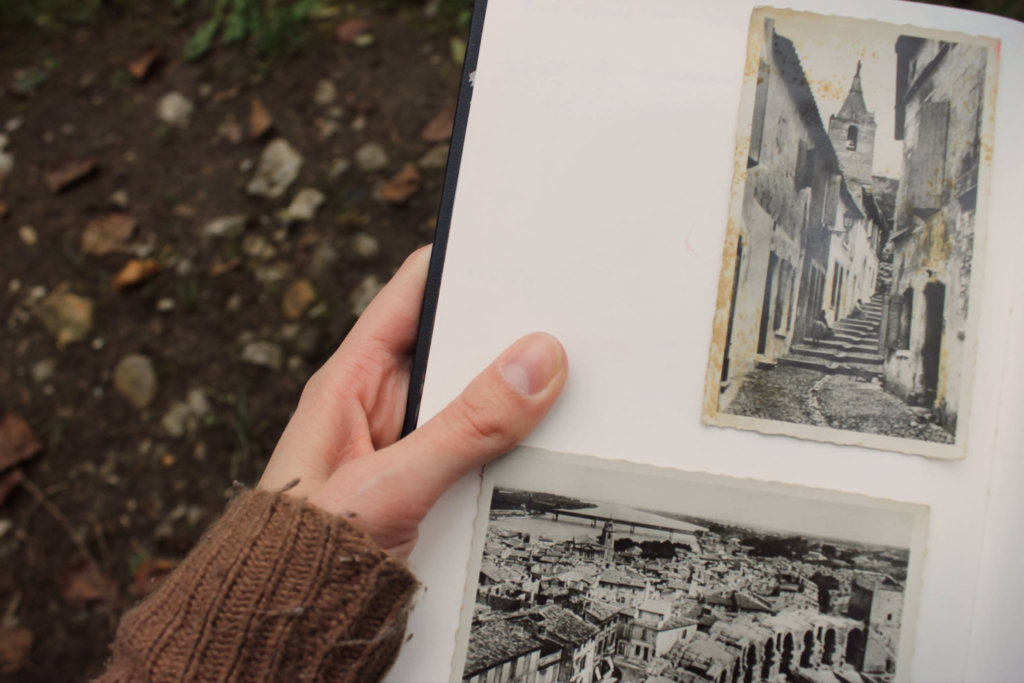
Immerse yourself in the language – even when you’re not living in a country that widely speaks it.
Some students do this with post it notes on objects around the house, forcing them to repeat the word while getting ready in the morning. What I always found useful, even living miles away from French speakers, was to listen to French radio. I listened to French radio (France Inter and France Culture) when getting ready in the morning, and before going to bed. I still listen to France Inter in the morning, sometimes changing it up to Swiss radio, RTS.
When I get too in my thoughts, I try to catch myself mid-action, acknowledging what I’m doing in French. This simple practice of mindfulness, of acknowledging how we feel, what we see, and how we are moving in the world, is challenging in one’s own native language. I find it incredibly helpful to repeat words in my head, of what I’m seeing, what action I’m presently doing, or what I need to do, in French. Not only does this help me practice a language, it also helps me organize my day, as I tend to start multiple tasks at one time without finishing any of set out tasks. Take this morning, for example:
« Je vais aller chercher le savon liquide ; je vais faire une lessive. Ensuite, je vais nettoyer la cage de Baloo, et après ça, je pourrai me faire un café. »
Imagine your future life in the language

I knew early on that I wanted to move to France. I ended up doing that briefly, but the point being that the end goal was always there. While in rural America, I could paint a picture of my dream life, before I even knew what tools I had to get there. I wanted a small apartment in Paris (cliché, yes) with a cat (I also wanted a vespa, but that dream is still on hold).
Since starting to learn French, I’ve tried Spanish, Italian and Russian. None of these languages have stuck. I do feel that it’s linked to not having a set-out goal for these languages. I do not see myself living in Colombia, Puglia, or Kazakhstan (although I would love to visit!) While I’m curious about all, and would love to speak all fluently, the picture I’ve painted in my head isn’t clear of where these languages would lead me. As such, I’m less driven, I do not immerse myself in them at home, and only practice with an occasional Duolingo lesson or UN language class (one of the perks of working for an international organization is free language classes!)
Get out of your comfort zone

They say that learning a foreign language is more difficult as we grow older. While I don’t have any scientific data to back my reasoning, I do believe a large part of this is due to our over stimulated egos.
Children accept other kids in their social groups without judgement, just as they absorb the world around them without over analyzing.
The older we get, the more we bang our heads against the wall trying to figure out grammar rules, or comparing one language to another, translating word for word when languages often can’t be translated as such.
You will sound like a caveman when you begin learning a language. And that’s okay.
Begin with reading children’s books and writing sentences about elephants and bears buying apples or drinking milk (as with my recent Russian sentences on Duolingo).
Learning a new language is a long game. To make the most of it, leave your ego at the door.
Find what you love, and come back to it consistently


I was a very average French student in my university class. To be honest, I thought Spanish would be more useful, however all of my friends studid French. I followed the crowd, and four years later I was still in class, the one that I kept going to, while my friends had dropped out.
Despite a degree in French, it wasn’t advanced enough to complete a Master’s program at the University of Nantes, but it somehow suited the University of Savoie Mont Blanc (perhaps to enlighten the administrative team with diverse international student numbers).
My paper was even once used to demonstrate in class what not to do (I will never forget you, chère Odile), who said in front of a group of foreign exchange students in Chambery « Vous voyez? Juste parce que vous vous exprimez bien, ça ne vaut pas dire que vous savez comment écrire ! »
I spent many a frustrated night fumbling over why a French person would respond to me in English, when I was working so hard to become fluent. A past French boyfriend said that my French was so poor, that it would just be better if we spoke in English altogether.
That relationship ended real quick.
Researching vocabulary to buy stamps at the post office, or explain my intimate parts at the gynecologist, all seemed frustrating at the time, even trying to make a joke with French people! Because speaking your native language feels like breathing. Yet the rewards of being able to hold a conversation, buy a stamp, or explain the details of a yeast infection, felt so rewarding.
Eighteen years later I am comfortable in French. People no longer reply in English, and are often even surprised to learn where I’m from.
Despite this, I don’t know if I’ll ever truly feel like a “native” speaker, for every day brings with it new words to learn.
This is part of the beauty of living a multi-lingual relationship, my husband and I teaching one another the equivalents of expressions and vocabulary in English and French, or deciding what language to watch a movie in (often times he wishes to watch in English, while I want to watch in French to improve).