A chrome-colored Rolls Royce adorned with a Monaco license plate catches my eye as we pull into La Réserve, a 5-star luxury hotel discreetly located in Bellevue, a village 3 miles from Geneva, Switzerland.
If the HBO series The White Lotus were to choose a film location in Switzerland’s French-speaking region, La Réserve would be it.
“Johnny était la,” my mother-in-law says in a hushed voice, referring to Johnny Hallyday, France’s Elvis Presley.
Advertised in Forbes, Condé Nast, and Vogue, La Réserve’s clientele are comprised of high-net worth individuals. Swiss custom to respect privacy also offers celebrities a chance for a “normal” life. Local news cites George Clooney as a previous guest, and as a social media follower of Anne Hathaway, I’ve recognized the earth-toned wall and colonial safari décor in a story she shared while attending an event for Moncler.
Today we were here to celebrate my brother-in-law’s 40th birthday, a milestone age requiring pomp and splendor (as well as an excuse to get together with family, celebrating life while we have it).
Inside Le Tsé Fung: Shanghai Glamour in Switzerland
Money has a distinct smell.
Wealth is strewn over La Réserve’s 500-count bed linens and wood-scented air fragrance. And while I feel incredibly fortunate to have experienced high-end restaurants in my lifetime, I am still unable to walk into high-end luxury with a clear conscious.
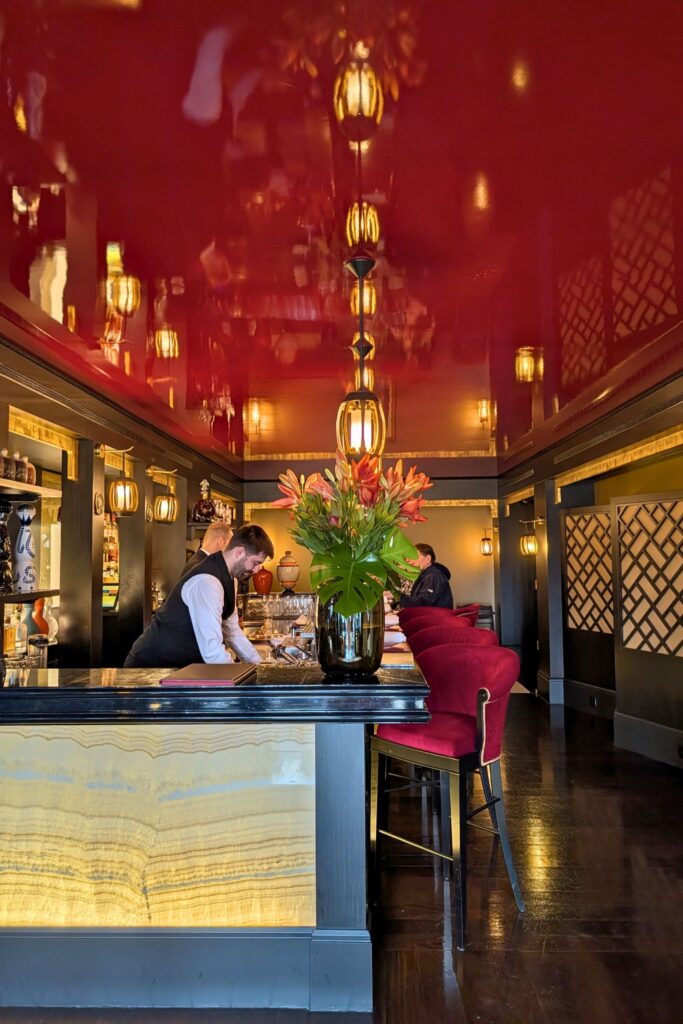
We pass through striped curtains to the world of Le Tsé Fung, composed of velvet red chairs and golden curtains, a picture of Shanghai vintage glamour as in illustrated in Wong Kar-wai’s film In the Mood for Love. A server rushes to my side as I sit down with a small, velvet-covered stand. At first, I wonder if this stand is to set my feet upon so as not to dirty my soles- only to realize that it was to keep my small clutch from touching the already pristine floor.
The 2025 Michelin Guide notes 145 Michelin-starred restaurants throughout Switzerland, Le Tsé Fung being the only Chinese restaurant among them holding a prized star, awarded to establishments for exceptionally high standards of cooking beholden to the finest ingredients.
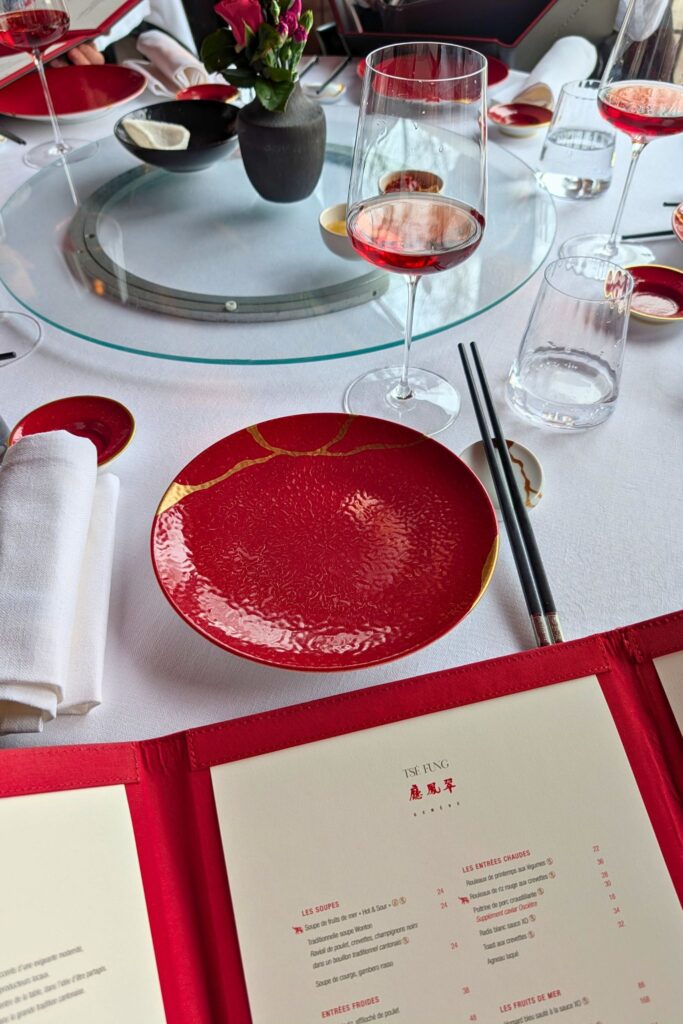
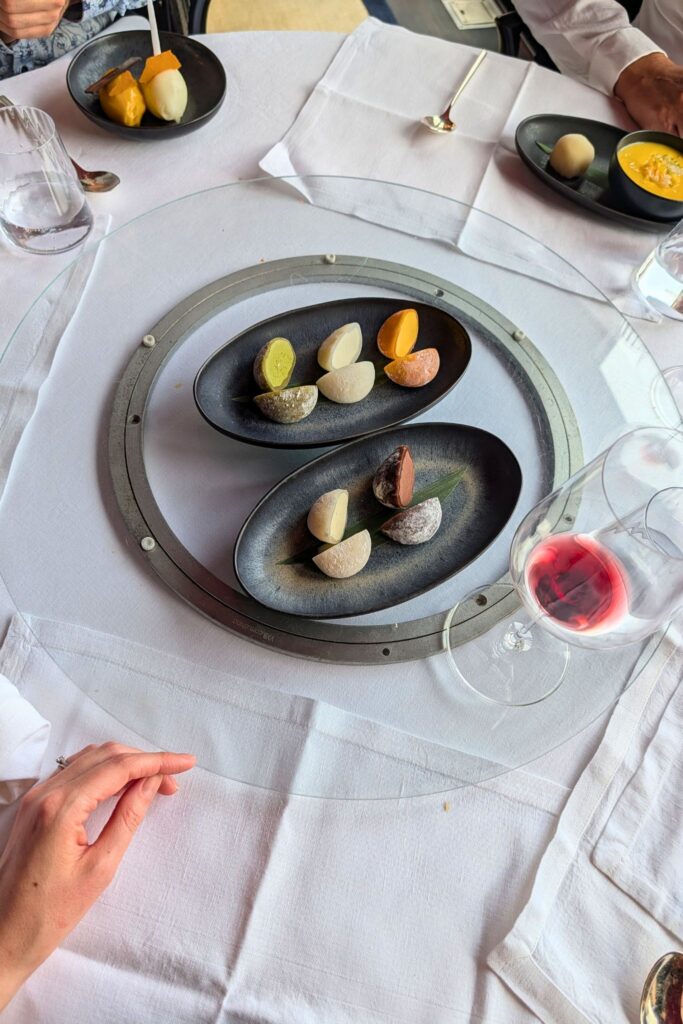
A pair of elegant chopsticks are poised on a marble disc, placed next to a warmed wet towel to cleanse and refresh hands before the experience begins. The center of the table includes a spinning glass table, making it easy to share meals as custom in China.
The Experience à table
A waitress with long blond strands pulled back in a sleek ponytail welcomes us. I notice that her black dress suit has not a single strand of cat hair, unlike nearly all my clothes, including my bunched up black coat I hide in the corner of my chair.
“The Tse Fung team welcomes you to our modest interpretation of the ancestral art of Chinese cuisine”, the menu reads. Several choices are à la carte, and three carefully composed menus guide amateur Michelin-star eaters like bumpers on a bowling alley.
I tried to avoid gawking at the prices, but I was fascinated, wondering if the Dimond menu featuring a greasy-skinned Peking duck merited 198 CHF.
The waitress seemed to read my innermost thoughts, noticing my eyes lingering on the details of the highly priced Dimond menu.
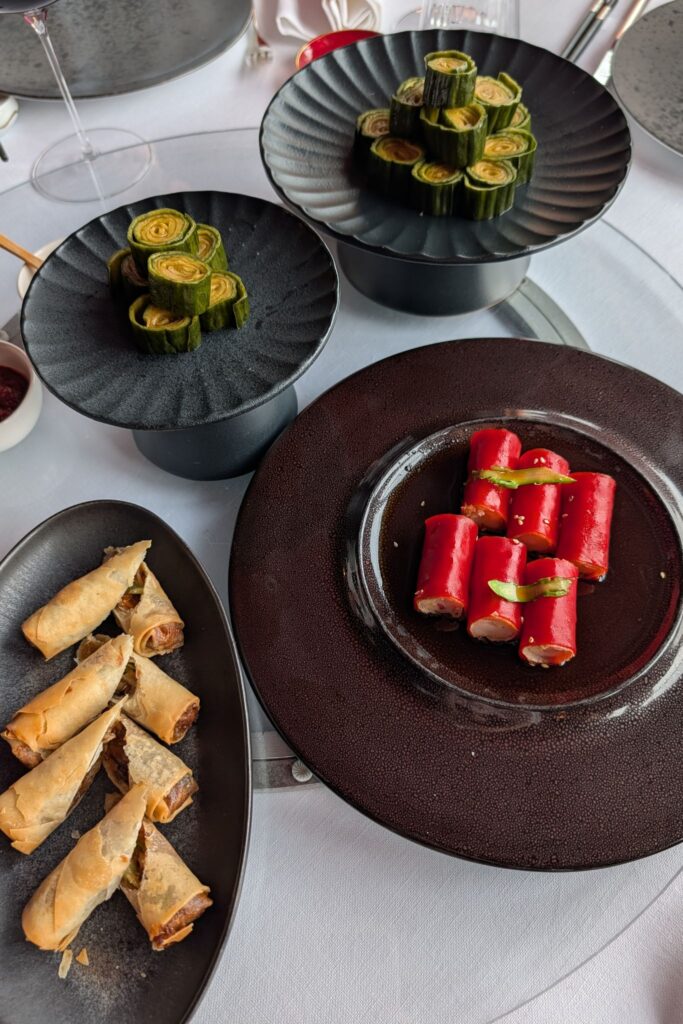
“The red rice rolls are what earned the chef his Michelin star.”
Damn. She was good.
Among the five of us, we shared two Emerald and two Diamond menus — a procession of seabass, beef with basil stir fry, Szechuan chicken, and the legendary Peking duck.
Authentic Peking duck is no casual undertaking; the preparation can span anywhere from one to five days, with the final roasting alone lasting close to two hours.
Eating roasted duck in the week leading up to Lunar New Year felt especially fitting, as the dish is traditionally shared among families as a symbol of prosperity and reunion. The dish traces back to the 13th century, a delicacy for imperial rulers. Legend says that the Qianlong Emperor (1736-1796) was a particular fan, eating Peking duck eight times within a two-week period.
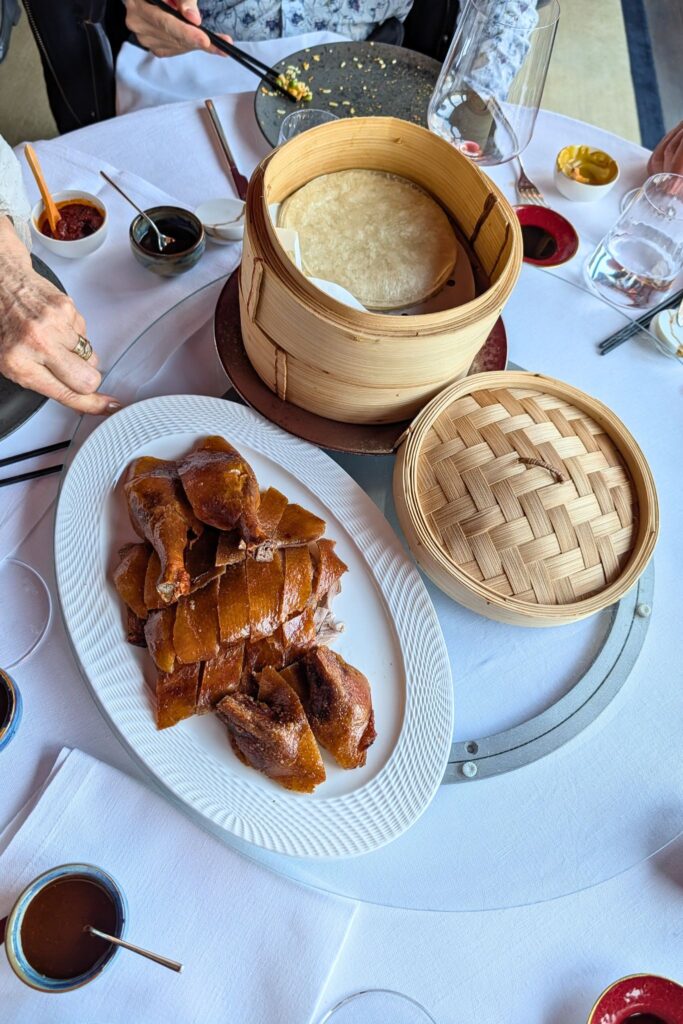
I tried to push from my mind the image of the ducklings that waddle beside me at the park during my lunch breaks, instead drawing my attention to the lacquered skin before me — crisp and glistening, its oil pooling gently at the surface. The skin, delicately separated from the flesh through an inflation process during preparation, offered a texture both airy and rich, unlike anything I had tasted before.
Peking duck is as much an art in its preparation as in its presentation, served traditionally with thin crepes steamed in bamboo baskets — known as Chun Bing (春饼), ready to be layered with slices of duck, sweet bean sauce, carrots and cucumber rolled neatly into a delicate fold.
Carrying Luck into the New Year
2026 marks the Year of the Fire Horse — a symbol of intensity, movement, and accelerated change. Tradition warns that one’s Chinese zodiac year brings its own personal challenges. For fellow horses, 2026 reminds us to move thoughtfully, even when life seems to charge ahead.
Red, a symbol of luck and protection, is woven into Le Tsé Fung’s seat cushions, with accents in the perfectly placed chopsticks and warm hand towels.
While the meal was unquestionably indulgent, I felt that abundance did not need to be extravagant. For true elegance is in a table turning, sharing a dish that has survived dynasties amongst loved ones. If the Fire Horse urges us forward, perhaps the greater wisdom lies in knowing when to pause.