Geneva’s most haunting tales for Halloween
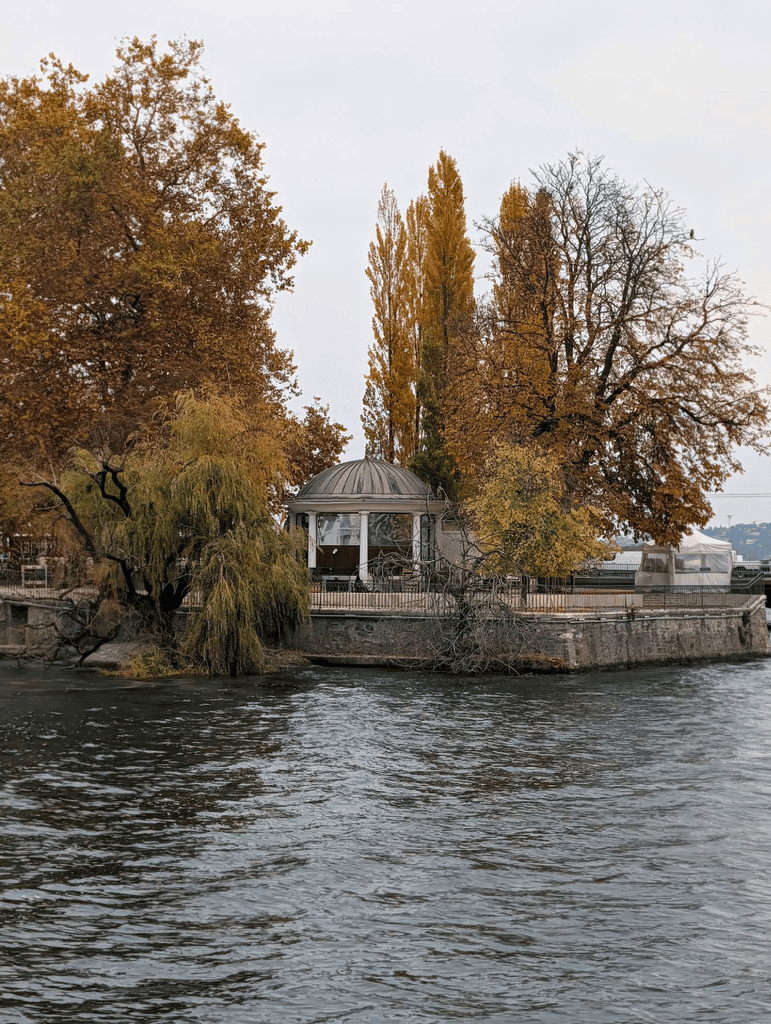
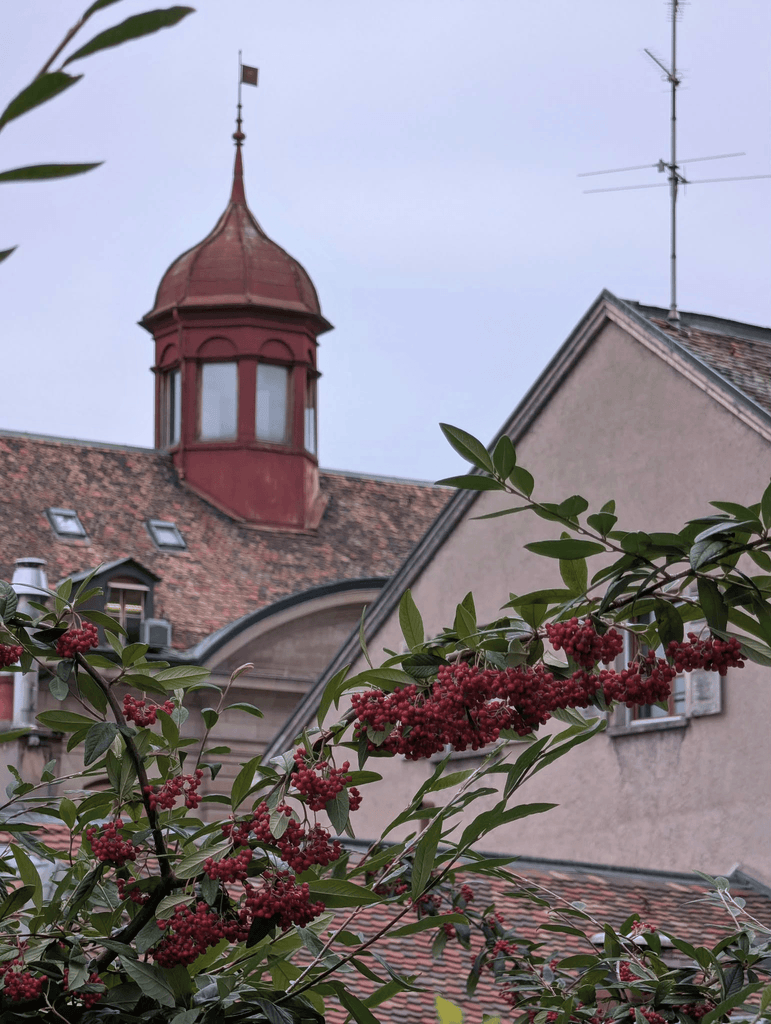
“Thanks to you, I now appreciate spooky season,” my husband recently said. “Before, it just seemed depressing – everything just… dies.”
As the leaves transform into burnt orange and ruby red, leaving a crinkling tapestry of color on cold morning walks, I feel an innate warmth. I love to write indoors with a candle and hot coffee as the rain patters on the window, curled up in a blanket with our fuzzy cat at my feet, watching reruns of When Harry Met Sally and You’ve Got Mail.
Halloween is not just a day to eat candy and buy a pre-packaged Temu costume; to me, it represents an entire season. One that begins as the days become shorter, beckoning us to slow down, reflect on our present lives, and honor those who are no longer with us.
In Geneva, the spirit of Halloween is imprinted in street signs and statues, reminders of generations gone by and of the city’s spooky past.
Chemin Michée-Chauderon: A street named in honor of the last of Geneva’s accused ‘witches’
Switzerland’s snow-capped mountains and translucent waters have inspired the elven sanctuaries in The Lord of the Rings and the star-kissed skies of Velaris in A Court of Mist and Fury. Faced with the country’s devastatingly beautiful landscapes, I find it hard to fathom that this part of the world was once one of the epicenters of Europe’s witch trials.
Per head of population, Switzerland’s French-speaking region executed more people for witchcraft than anywhere else in Europe: some 3,500, 70–80% of them women.
I once heard someone describe a person beset by misfortune as being born under a bad star. That seems to have been the case for Michée Chauderon. Originally from Savoy, Catholic and illiterate, she was an easy target for accusations of witchcraft in Protestant Geneva. Her first brush with the law came in 1639, when she was charged with having sexual relations outside of marriage. She later married but miscarried, and her husband died four years later.
Poverty struck the young widow with full force. To make ends meet, Michée worked as a laundress and, more discreetly, as a healer, using herbal remedies to ease suffering during the plague epidemics that festered in Geneva.
Across the region, witchcraft accusations were also a way for authorities to assert their control. Michée’s case, historians believe, was sparked by a neighborhood dispute. She had refused to heal a sick girl, and eight women later testified that she had bewitched both that child and another young girl, one of whom was said to have become possessed. Suspicions that Michée had stolen a candlestick from one of the eight women who testified did little to help her case.
Examined by medical ‘experts’ for marks of the Devil (a spot on her thigh was declared the Devil’s mark after being pierced with a needle), Michée was tortured until she confessed that the Devil appeared to her in the form of a shadow, and, after making his merry way with her, led her to harm the two girls. On 6 April 1652, Michée was hanged on the Plaine de Plainpalais, and her body was then burned.
Today a street is named in her honor (Chemin Michée-Chauderon, 1203 Geneva).
The birth of Frankenstein
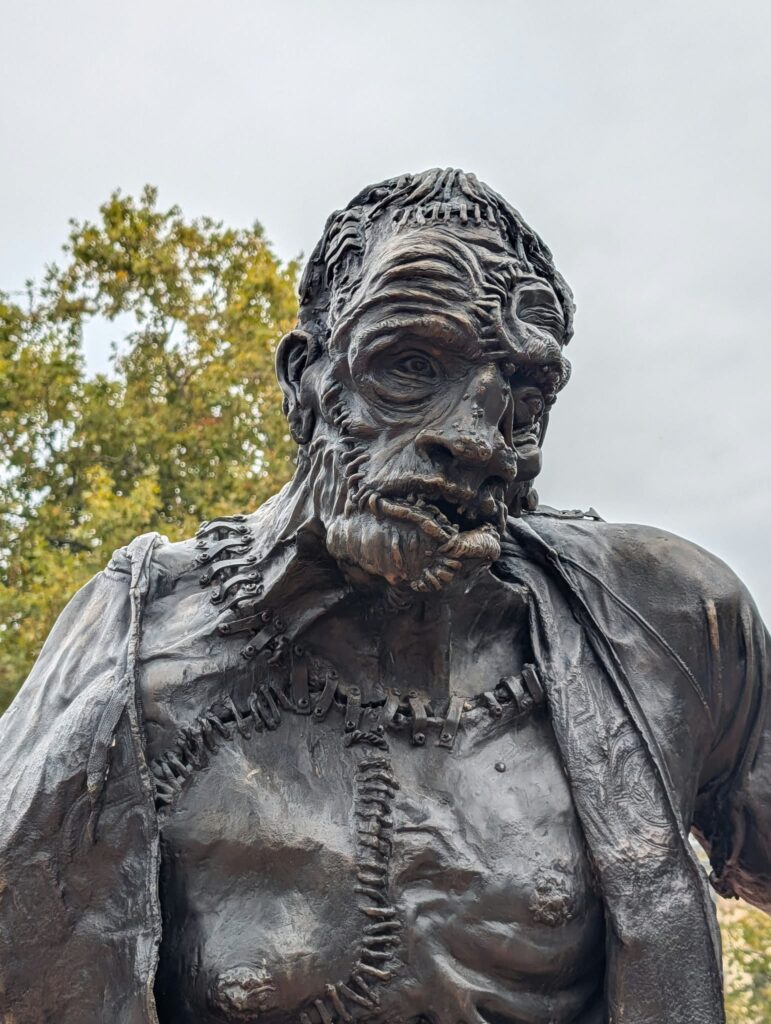
It was 1816, the year without summer. On the other side of the world, a volcano in Indonesia (Mount Tambora) had erupted the year before, spewing ash into the sky and bringing cold winds and gloomy rains. Snuggled in Villa Diodati in Cologny, a village on the outskirts of Geneva, was a group of friends, invited by poet Lord Byron, then in self-imposed exile from England.
Mary Godwin had traveled with her lover (unbeknownst to her at the time, he would soon become her husband) Percy Bysshe Shelley, and her stepsister Claire Clairmont. The relationship between Mary Godwin and Percy Shelley was strongly disapproved of by her family, as Percy was older, married, and already a father. They chose love over everything – with Mary keeping Percy’s heart for nearly 30 years after he drowned in a shipwreck off the coast of Italy (an incredible gothic love story for another blog post).
At a time before social media and iPhones, the group read by candlelight a French translation of German ghost stories. Lord Byron challenged the group to write their own horrors.
While others quickly gained traction on their tales (Byron’s personal physician John Polidori began his manuscript for what would become The Vampyre, which paved the way for Bram Stoker’s Dracula), Mary initially felt blocked, as if she had nothing to offer.
One evening, Mary listened in on a discussion between Lord Byron and Percy Shelley about galvanism, the use of electricity to stimulate muscle movement. That night, she had a nightmare. In her introduction to the 1831 edition, Mary described her vision: “I saw the pale student of unhallowed arts kneeling beside the thing he had put together. I saw the hideous phantasm of a man stretched out, and then, on the working of some powerful engine, show signs of life.”
Mary was not new to the concept of loss – her mother, Mary Wollstonecraft, a writer and advocate for women’s rights, died 11 days after giving birth to Mary. As a child, Mary is said to have spent time at her mother’s grave, learning to spell her name by tracing the letters on her tomb. A haunting question in Frankenstein, perhaps shaped by Mary’s own life: what would happen if we could bring the dead back to life?
Empress Sisi’s tragic end
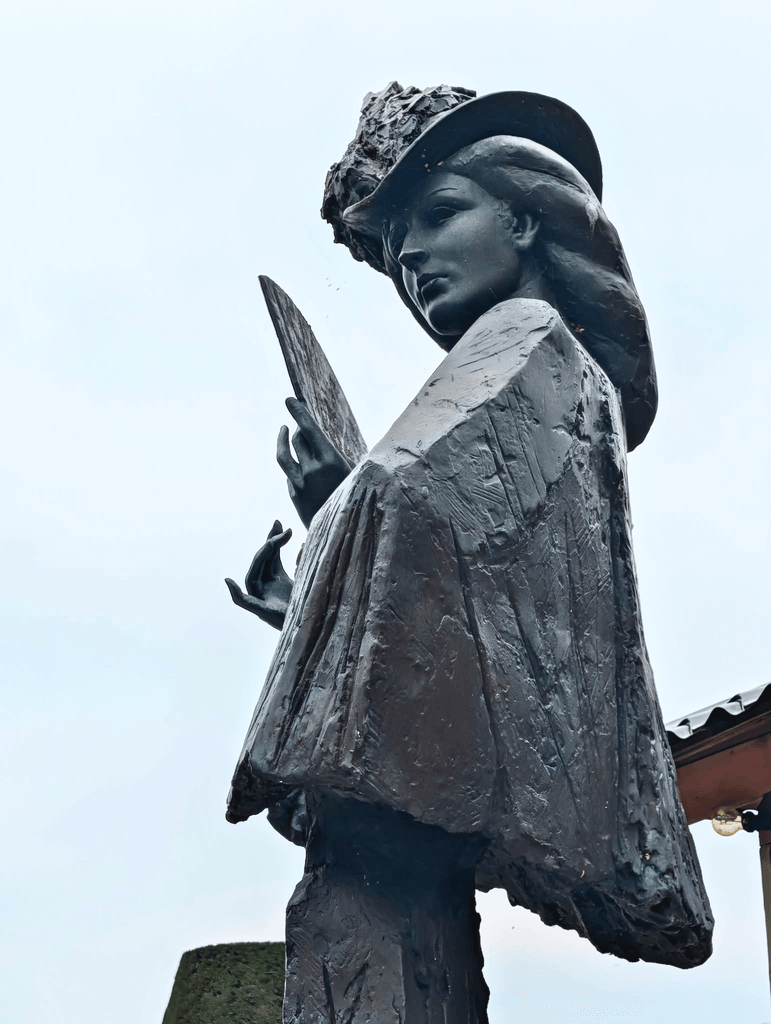
Empress Elisabeth of Austria is one of history’s most acclaimed It Girls.
They say good girls don’t make the history books, and the Empress, best known to the world as Sisi, was unique in her oddities – such as the anchor tattoo she got at around 50, hidden from her husband, Emperor Franz Joseph I, which symbolized her fondness for the sea.
Her cinched 20-inch (50 cm) waist and ankle-length chestnut hair (washed every three weeks with egg and cognac) were the result of a fanatical beauty regimen, which has fascinated historians generations later. Wishing to preserve her eternal youth, Sisi refused to be photographed after the age of 32.
As with her life, Sisi’s grand finale made the history books, and happened to take place in Geneva.
The Empress was no stranger to Switzerland. She made nine journeys to the land of milk and honey over the course of her lifetime, between 1867 and 1898.
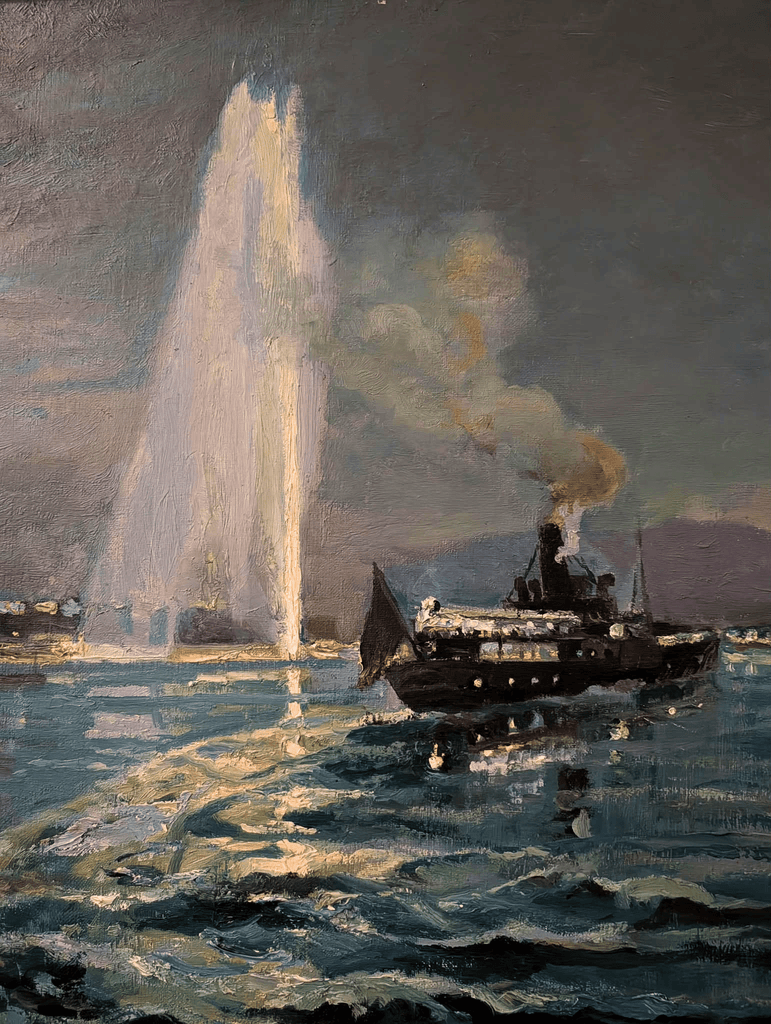
Her final voyage was to visit Baroness Julie de Rothschild at her estate in Pregny. Sisi boarded a Belle Époque steamboat from Montreux, making her way across the lake to Geneva, where she stayed at the Hotel Beau-Rivage. Today visitors can sleep in the Sissi Suite, embellished with flowing draping above the bed and ornate pillow cases, even a mirror that is said to be the original, the one in which the Empress would have analyzed every crease in her face and nonexistent bulge on her waspy frame.
On 10 September 1898, Sisi, well rested after her night at the Beau-Rivage, walked towards the docked steamboat waiting to take her back to Montreux. She was taken by surprise when an Italian anarchist stabbed her in the chest with a sharpened file and fled. Unaware of how badly she was hurt (her tightly laced corset is said to have slowed the bleeding), Sisi boarded the boat and collapsed shortly after it set off. She was taken back to her suite at the Beau-Rivage, where she died about two hours after the attack, at the age of 60.
Luigi Lucheni saw himself as a benefactor of society, improving the world by eliminating the rich. Because Geneva had abolished the death penalty, he asked to be tried in Lucerne, where it still existed, in hopes that his beheading would bring fame to his pathetic life. To his disappointment, his request was refused, leaving him with a sentence of life in prison, enough time to fester in his deranged thoughts. After 12 years, he hanged himself with a belt in his cell.
Lucheni’s wish was granted, in a way, in the afterlife. At the time, it was believed that the brain could be analyzed for abnormalities and attributes that defined a person’s character. Geneva-based Professor Louis Mégevand had Lucheni’s head separated from his body and his brain examined, and, to his dismay, found nothing abnormal. While Lucheni’s body was buried, his head was placed in a jar of formaldehyde and kept at the Forensic Institute in Geneva, only to be sent to Vienna in 1985, and buried far away from his body in Vienna’s central cemetery in 2000.
Rue Tabazan

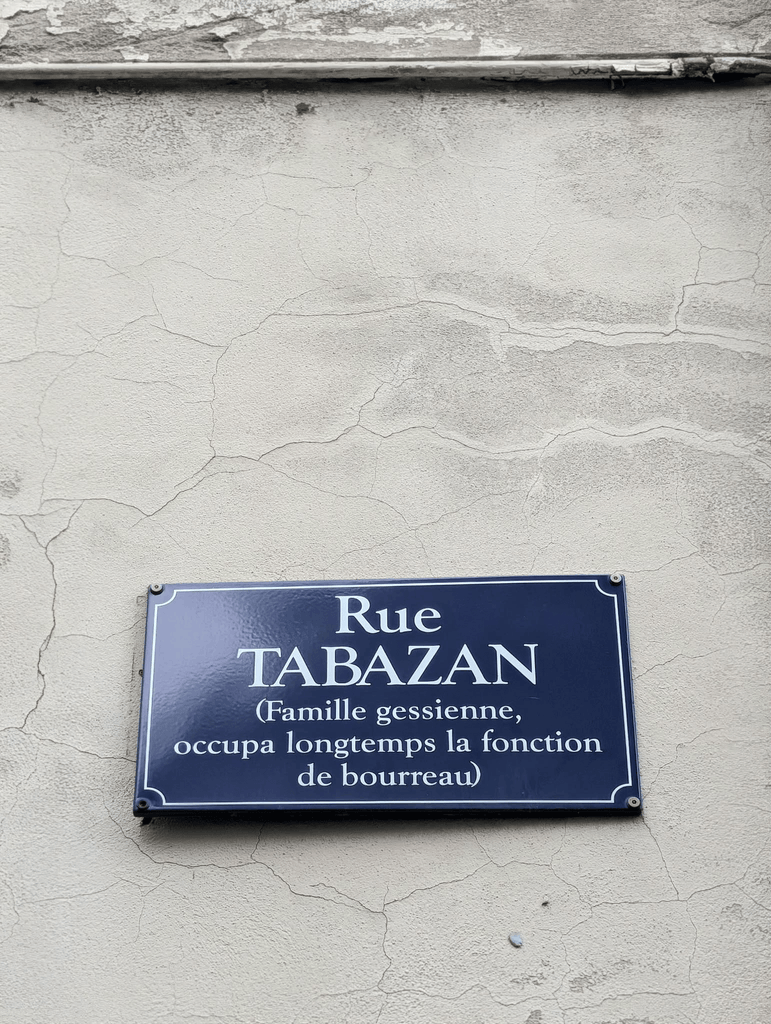
On a quiet cobblestone street in the Old Town is a metal sign of a hooded man with a long sword, signifying the former home of François Tabazan, famous for none other than being a celebrity executioner.
Coming from a long line of executioners, Tabazan had his night of glory during Geneva’s celebrated Escalade, when the city repelled a surprise attack from the Savoyards in 1602. It’s said that Tabazan hanged 13 prisoners before cutting off their heads. In addition, he beheaded 54 attackers who had died in the fighting, displaying their heads on spikes for six months.
In an interesting turn of events, Tabazan lived to be 90, an unusually long lifespan in the 17th century. Historians also note that Tabazan’s own ancestors were Savoyard, as were those he executed.
Geneva’s guillotine
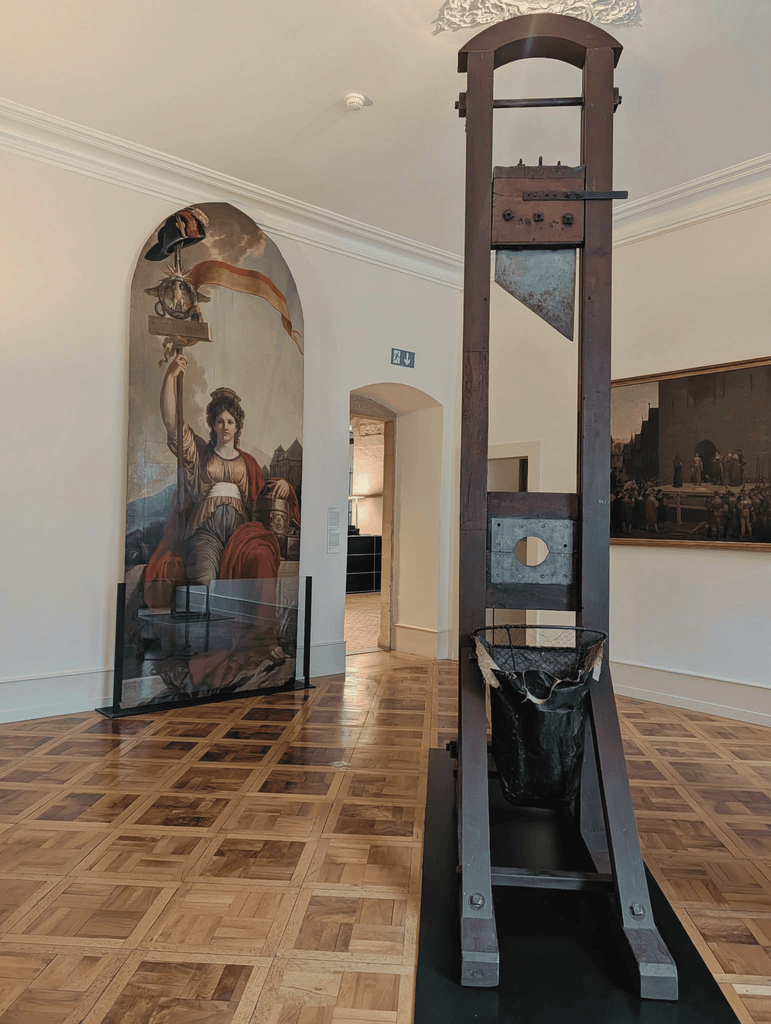
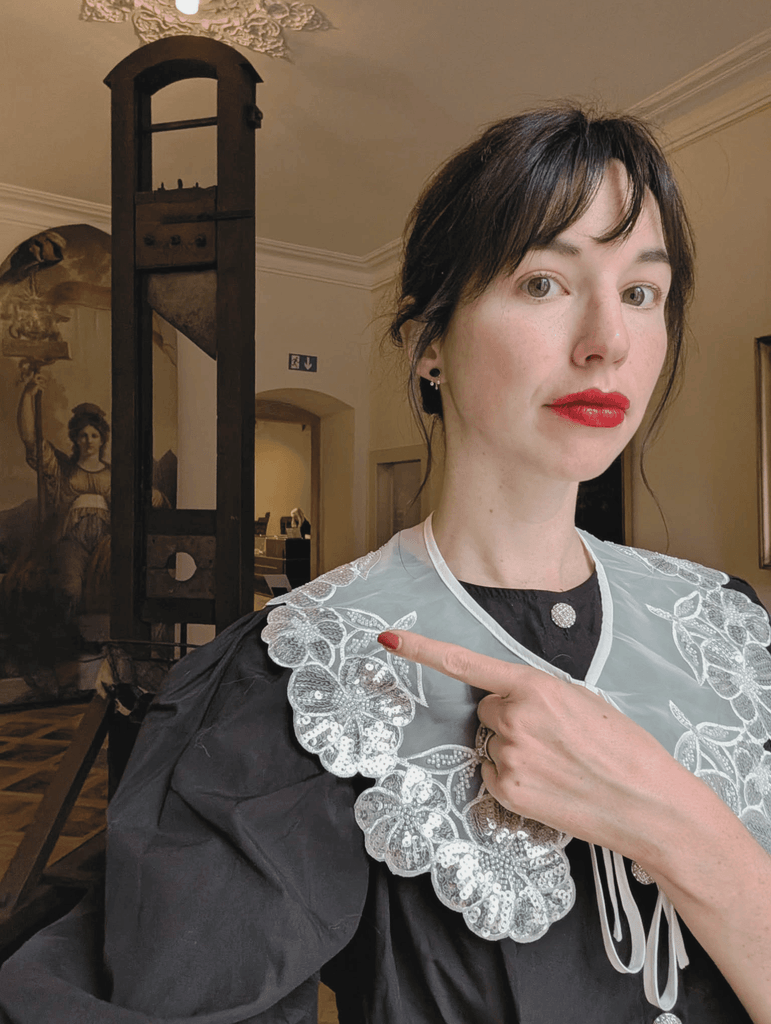
An eerie sight stops visitors in their tracks at the Maison Tavel – Geneva’s own guillotine. Built in 1799, it was used 36 times while Geneva was under French rule, and six more times after Geneva regained its independence. It was set up as needed on Place de Neuve, where the Grand Théâtre now stands.
While the death penalty was abolished in Geneva in 1871, another guillotine belongs to Lucerne’s history museum. It was last used in 1940 to execute 32-year-old Hans Vollenweider, convicted of three murders. Unlike Geneva’s guillotine, which remained in the city, this one was passed from canton to canton. Vollenweider’s execution was widely controversial, not least because Swiss voters had already approved a new criminal code abolishing the death penalty for civilian crimes. It came into force in 1942.