Wiener Schnitzel, Klimt’s Gold, and the Valley of Apricots: Why Vienna is Worth Returning to
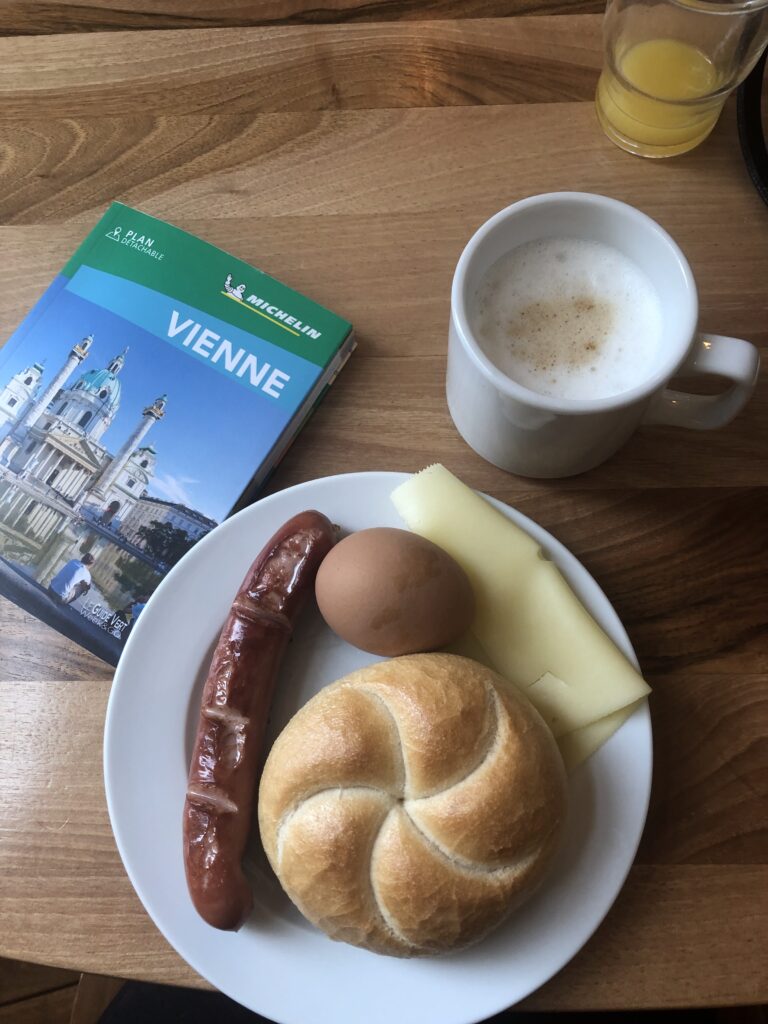
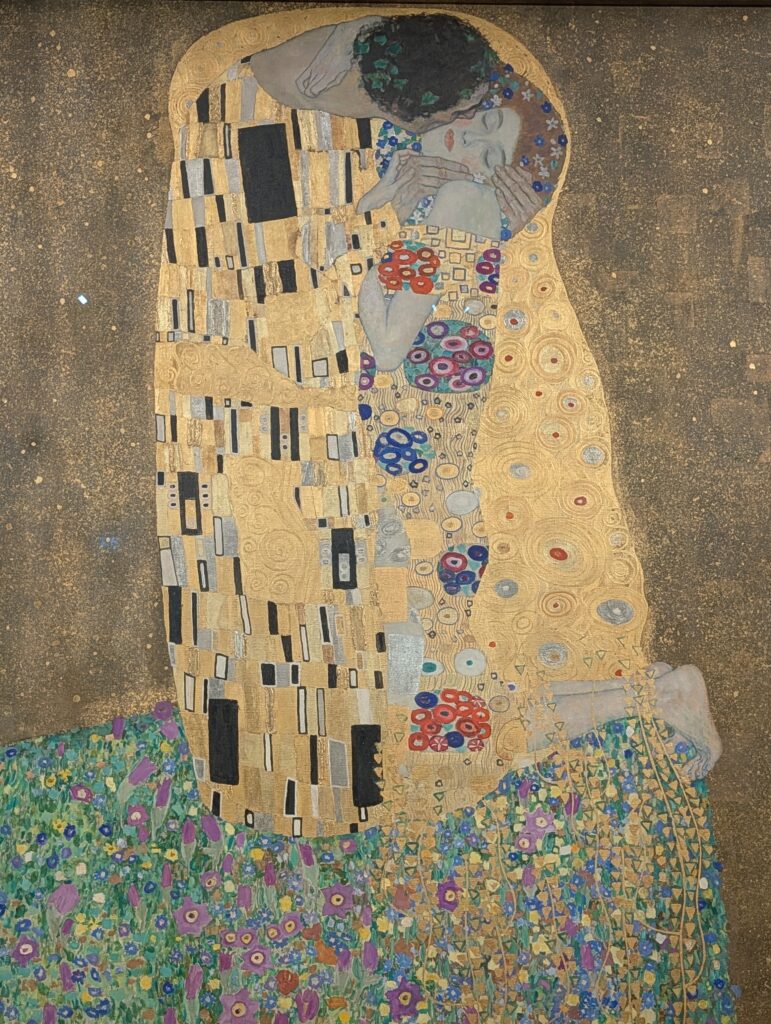
In my lonely bubble of co-workers and an ocean away from friends and family, I decided to book a solo weekend to Vienna on a whim. I knew there would likely be sausage. Perhaps even a reference to Sound of Music (although that was filmed in neighboring Salzburg). Less busy than Paris, and more exciting than Sundays in Geneva, Vienna is a peek into the House of Hapsburg’s former glory – museums, decadent chocolate, ornate cafes, and classical music concert tickets being sold on nearly every street. Years later, I brought my now husband, and more recently, we returned with my parents. Each visit presented a completely different experience.
Schönbrunn Palace
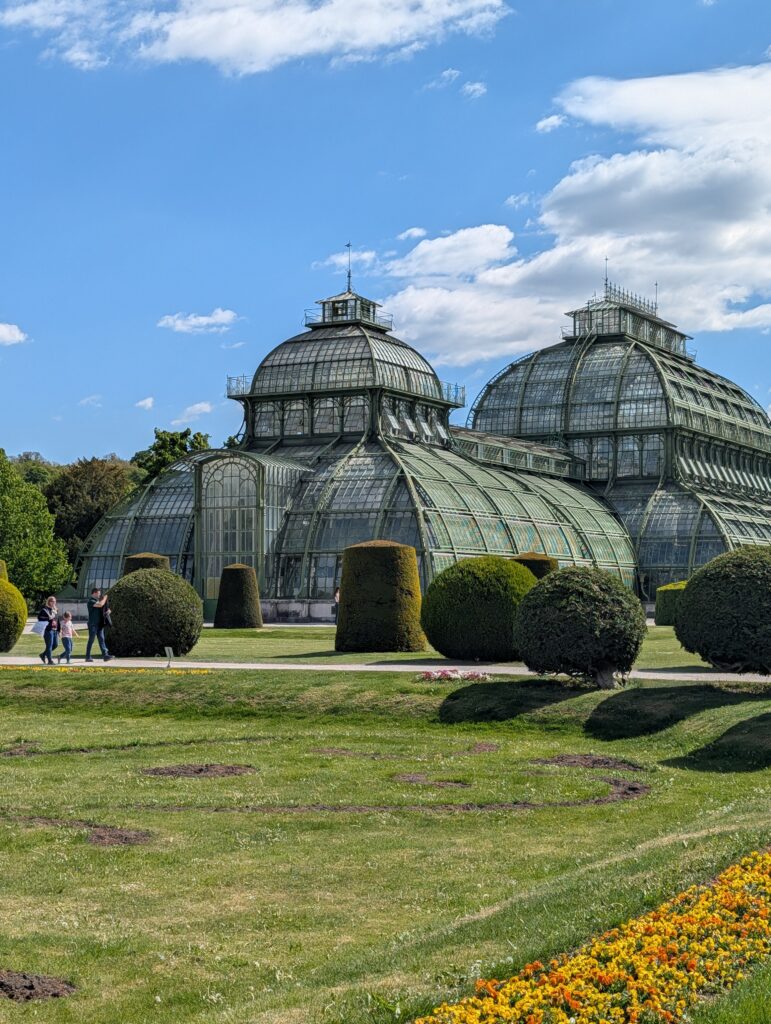
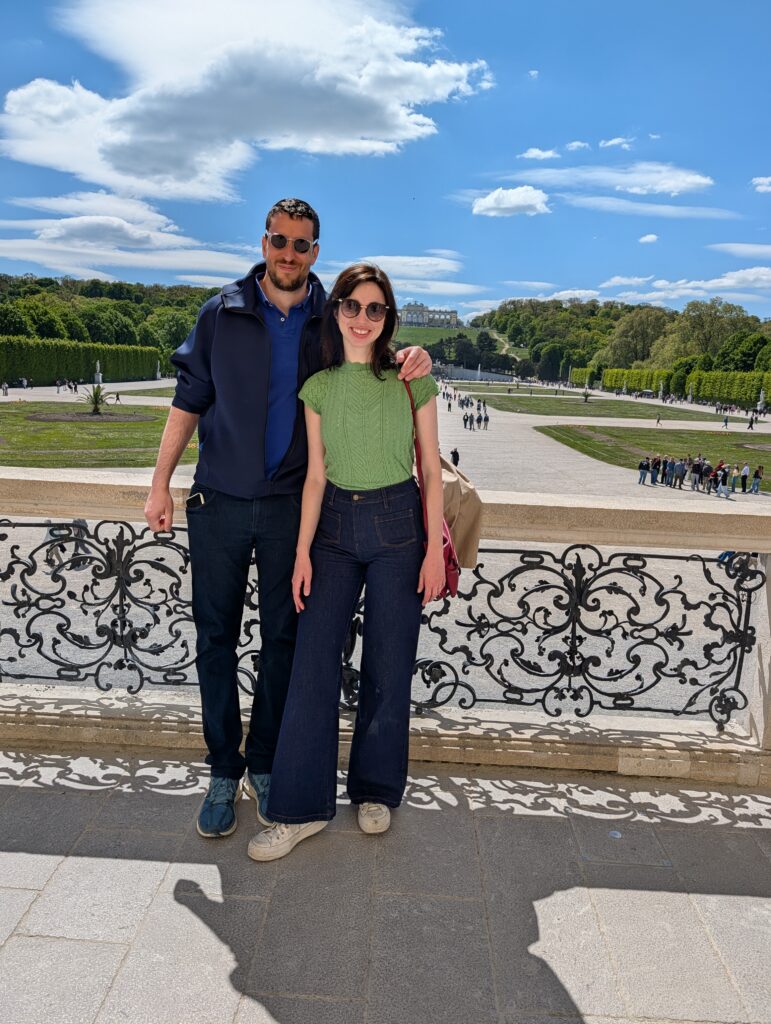
Schönbrunn Palace happens to be the color appearing in window shops this spring: butter yellow. Young 20-somethings pose in front of the spiral staircase in butter yellow gowns, leading to the terrace that Empress Maria Theresa once looked out onto when eating breakfast nearly 300 years ago. I wonder if she stared out into her pristinely organized garden, looking into the stone eyes of a fountain of Neptune, God of the Seas, she, ruler on land.
Among her accomplishments, including mandatory schooling for children and outlawing witch burnings, she is most recognized in history of having mothered 16 children, one of whom Maria Antoinette, former Queen of France.
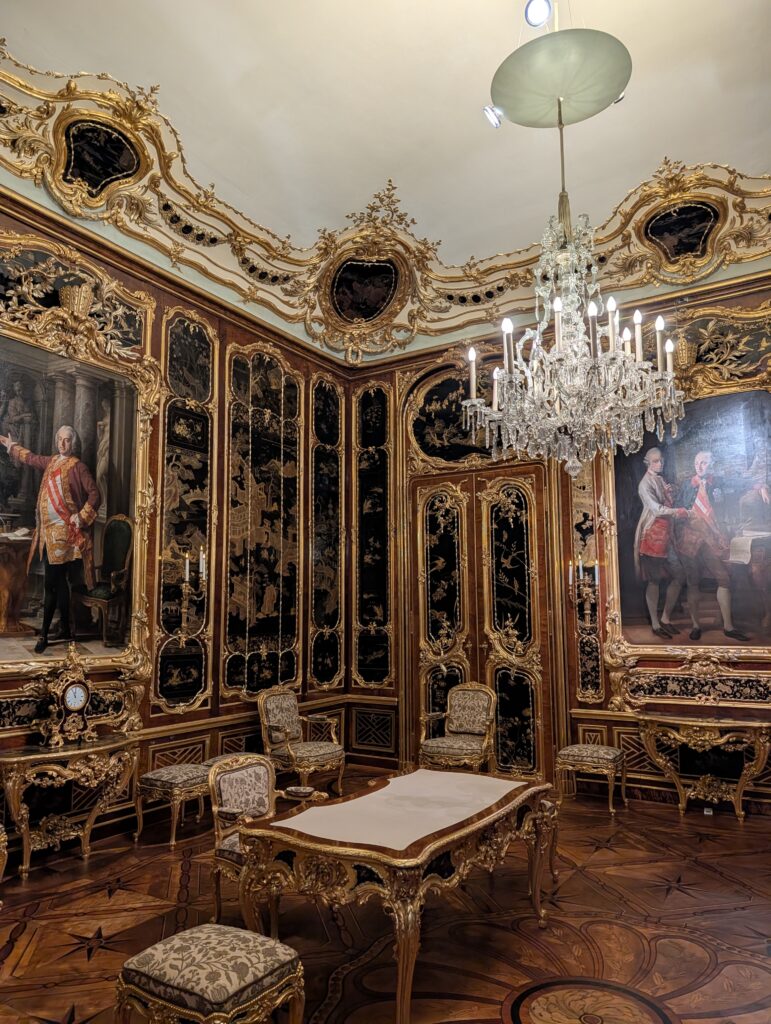
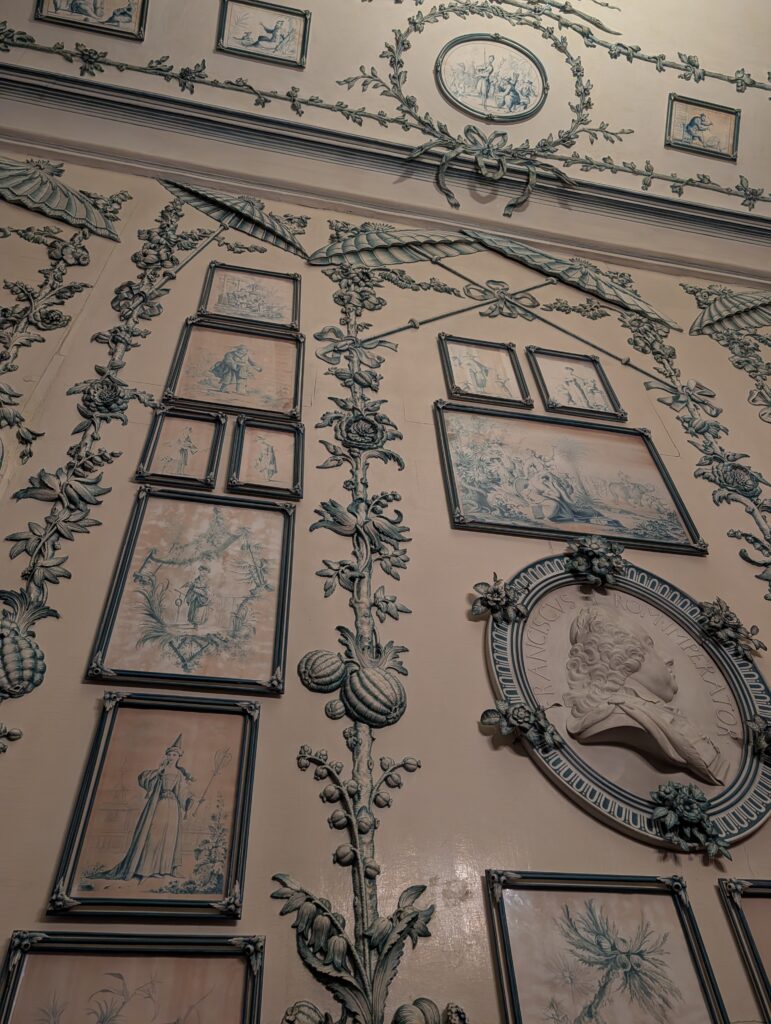
With less bling than Versailles, Schönbrunn Palace’s walls are nevertheless outlined in gold, symbolic of the Hapsburg Dynasty’s immense wealth and far-reaching power. We booked a tour through Viator (reservation link here). Our guide Michael began by leading us through the Great Gallery, illuminated by chandeliers holding 70 candle sticks, each with flames twinkling with Swarovski crystals, a gift from the Austrian-based enterprise to Schönbrunn. We passed beneath a ceiling fresco representing the Empire’s military strength, ironically the spot where a bomb dropped in the final days of WWII, before embarking on a two-hour tour of the Palace’s highlights.
Equipped with zero knowledge about the Hapsburgs, I found this tour fascinating. We learned about the origin of flea markets (yes, humans really did pay a man to have his monkey pick out bugs from their hair), but the most spellbinding tale I found as a helpless romantic was that of Maria Theresa and her husband, Emperor Francis I. The royals were said to have been deeply in love (they did have 16 children after all), unlike many arranged unions throughout history. When Emperor Francis I passed away, Maria Theresa turned his office into a grieving room, decorated in black lacquered panels etched with paintings from Asia. Years later, a note slipped from a book from Maria Theresa’s library, her parchment scribbles noting the minutes she cried over her deceased husband.
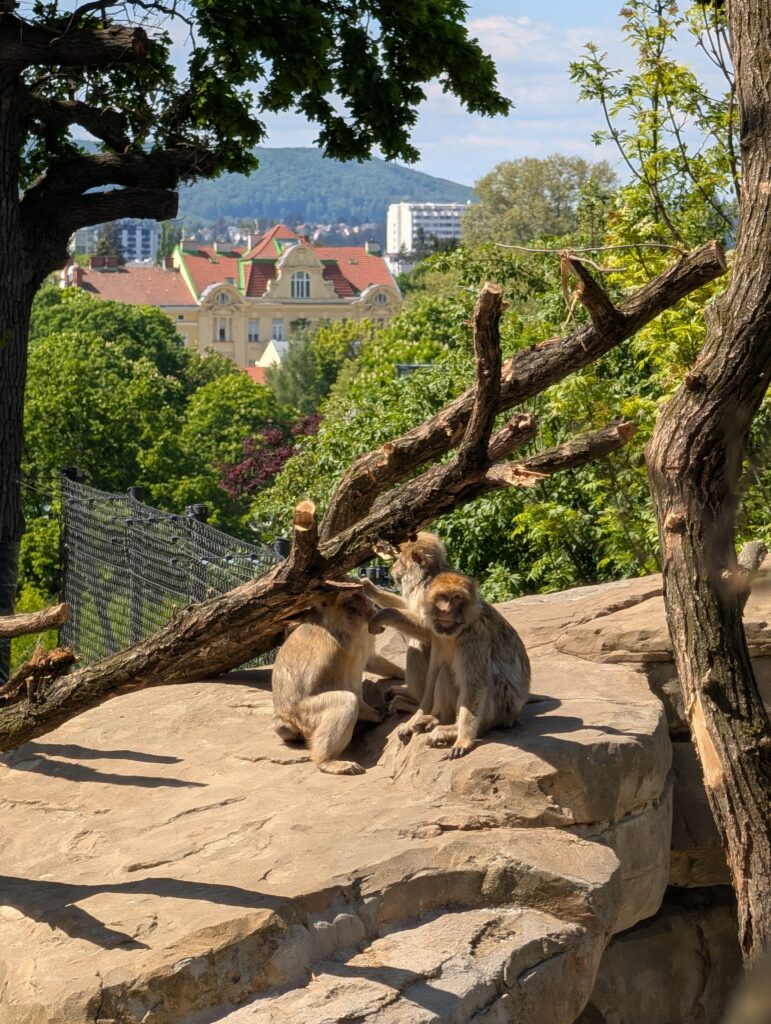
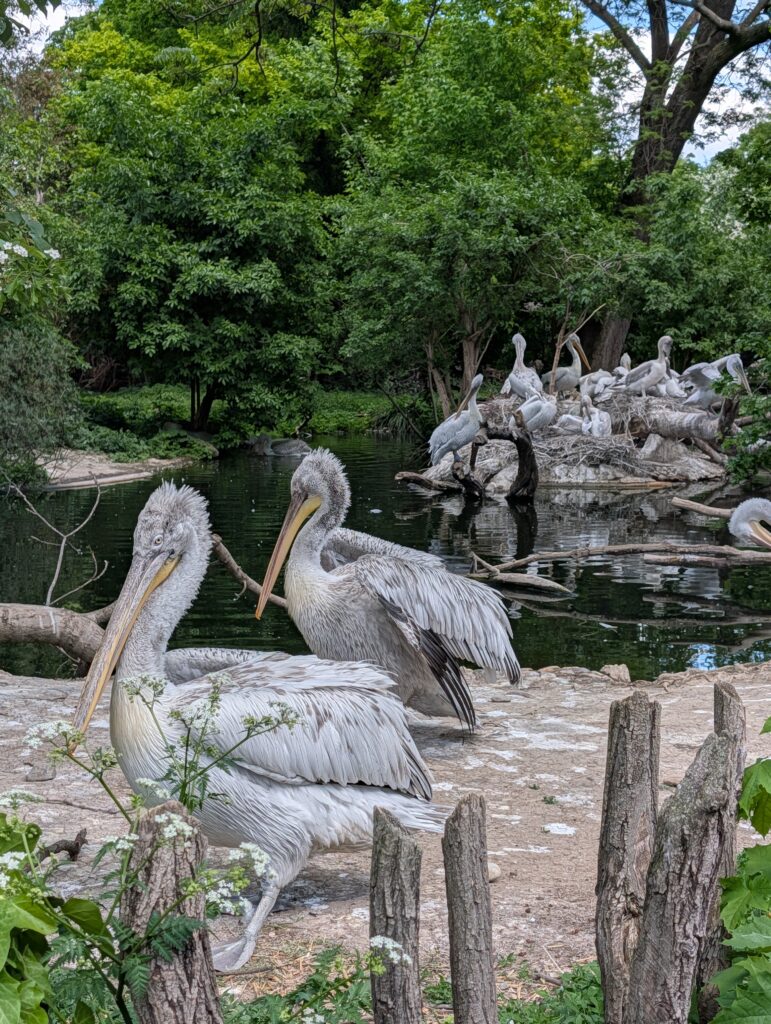
Schönbrunn Palace is not just for tourists- its immense park is free to access. As the sun shone in April, benches were occupied by couples leaning on one another or loners reading, a park that even schnitzel-loving Austrians enjoy.
The gardens are immense – and I regretted not having a full day free to soak it all up. While we did take a couple of hours to visit the Schönbrunn Zoo, seemingly busier than the interiors of the palace itself, the 50-minute walk from the palace to Café would have to wait until next time.
Address: Schönbrunner Schloßstraße 47 | Tickets for tour: Viator Skip the Line Access
Belvedere Palace
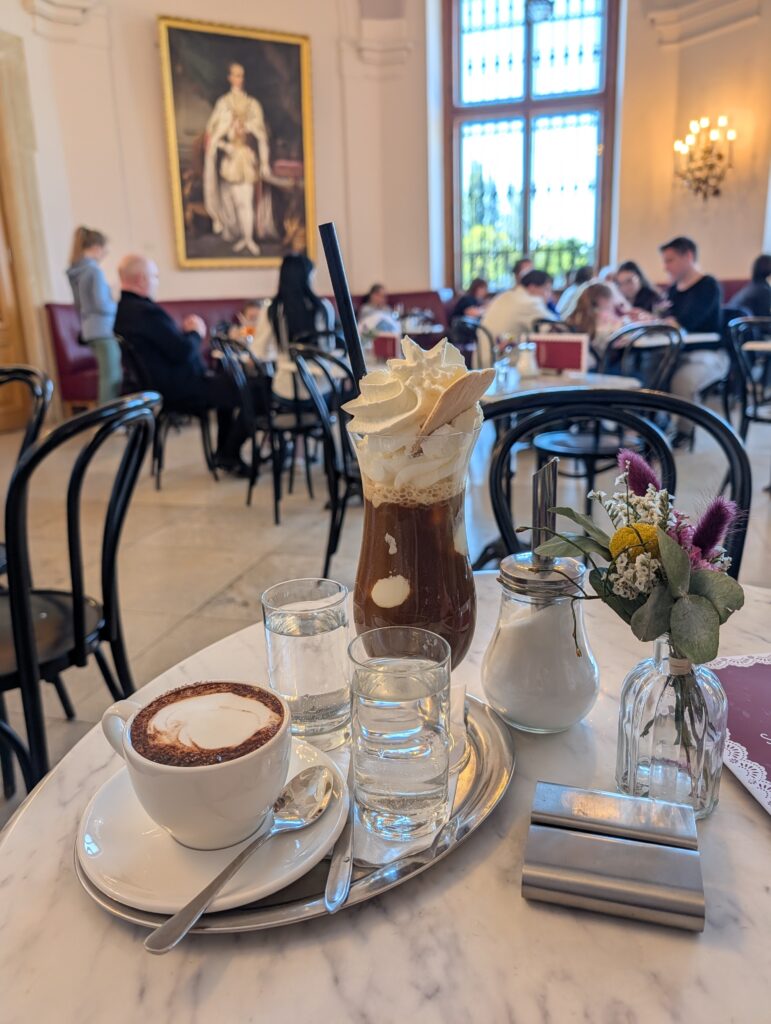
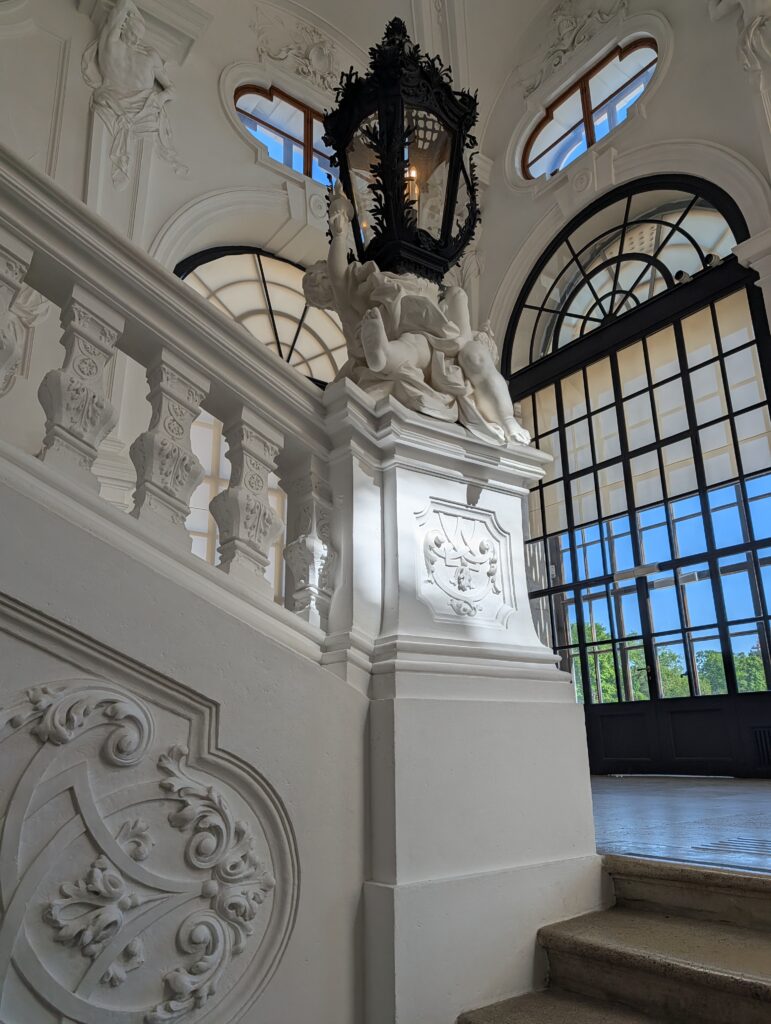
To get the ultimate learning experience of the Belvedere Palace, home to some of the world’s most important collections of paintings by Gustave Klimt and Egon Schiele, I decided to book a tour, because to understand a place, one must look to its culture, whether that be food or art.
With a morning full of activities, our tour was scheduled towards the end of the day, leaving my parents and husband ready for another wiener schnitzel and nap. Imagining a large herd of tourists, I assured them that we could slip away discreetly at any time.
An older gentleman with a rain jacket and khaki pants walked towards us, stepping so close that I could feel his spit as he asked whether our group was under ‘Laura’ in a thick Austrian accent. To our surprise, our two-hour tour was private to discuss paintings in the upper Belvedere. My family’s eyes grew wide with anxiety.
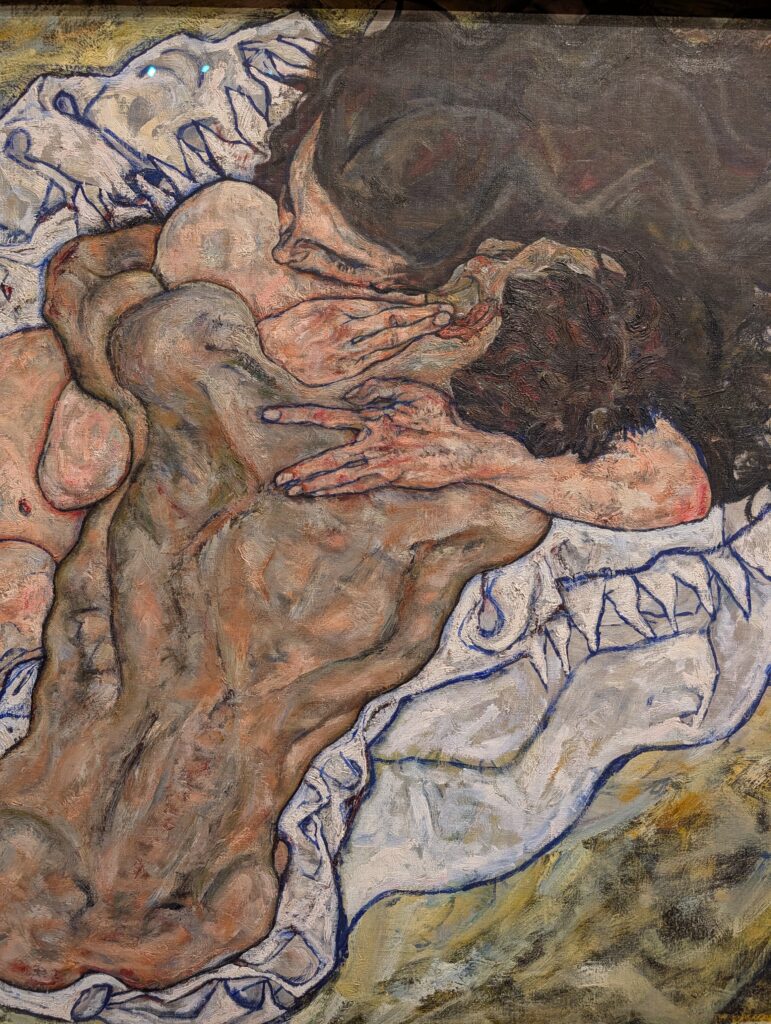
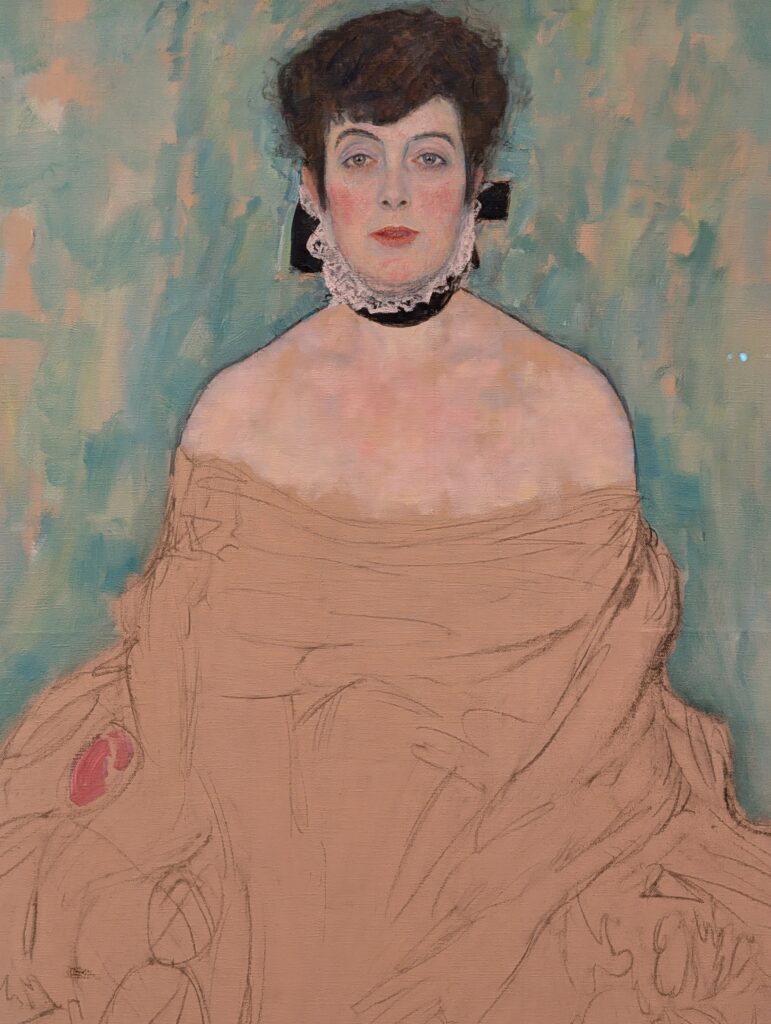
Coming from a family of painters, our guide was passionate about the personal lives of Klimt and Schiele, sharing how Klimt slept with most of his models. He even shared that his father had been amongst the crowd at the Belvedere when Austria signed a treaty in the Marble Hall, ending WWII occupation and creating a sovereign state.
“Come closer, you need to get really close to understand what I’m talking about,” our guide said as we stepped closer to the canvas, so close that we could see the layers of piled acrylic and smell the faint hint of chemical paint. Security guards warily looked over, wondering if our noses were too close to 100-year-old masterpieces.
One of my favorite pieces was The Embrace by Egon Schiele, illustrating two lovers, intertwined. Love pours from the painting, but almost in a desperate way, as if they need to hold on to one another to survive. Back bones from the male figure protrude, as if the love for the woman he holds is his sole nourishment. We learned that the painting was a portrait of Schiele and his wife, Edith. In a grim turn of events, Edith, then six-months pregnant, fell ill with the Spanish Flu a year after the painting was completed. Schiele caught the same illness, dying three days later at the age of 28.
Address: Prinz-Eugen-Straße 27, 1030 Vienna | Tickets for tour: Belvedere Skip-the-line Tour & Official Guide
Austrian National Library
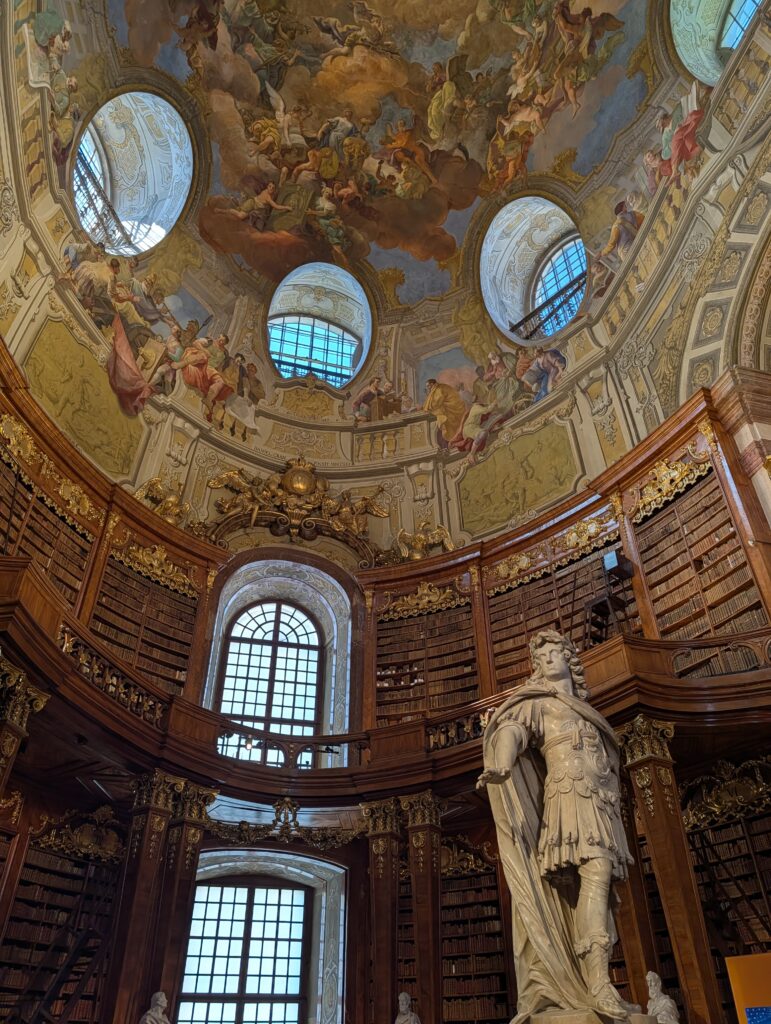
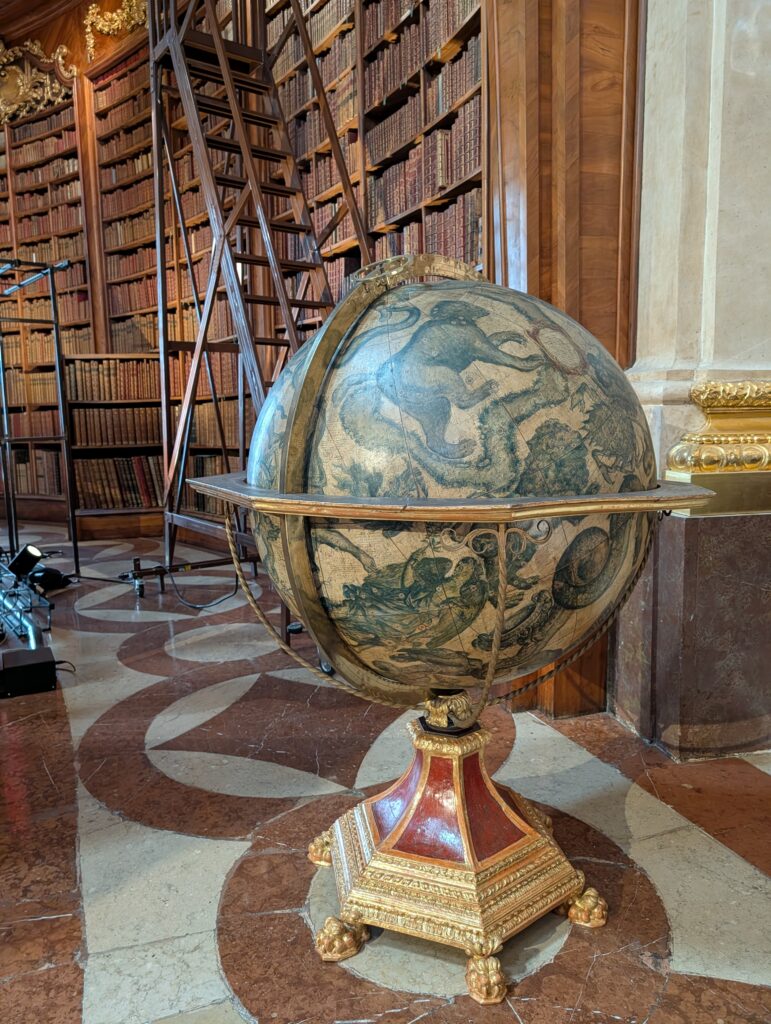
One of the most romantic scenes in Hollywood is when a beast falls in love with a beauty, earning her affection after asking her to close her eyes, opening a door to a luminous library with shelves that seem to go up to the heavens.
I felt a similar twinge of excitement once entering the doors of Vienna’s State Library, a collection of roughly 200,000 books from 1501 to 1850. The smell of wood and old paper fill the room, decorated in ancient globes showing the positions of the stars.
Pieces of the collection are included in UNESCO’s Memory of the World Programme, such as a map that depicts the road network of the ancient Roman Empire, and a collection of 1,200 letters between psychoanalysts Sigmund Freud and Sándor Ferenczi, detailing their therapeutic techniques.
Address: Josefsplatz 1, 1010 Vienna | Tickets: Tickets to the Austrian State Library
Spanish Riding School
Hot tip: do not sit front row at the Spanish riding school if you are allergic to horses.
This is something I often forget about myself – while my Chinese astrological sign is a horse, my physical embodiment of such a beautiful animal is very much the opposite.
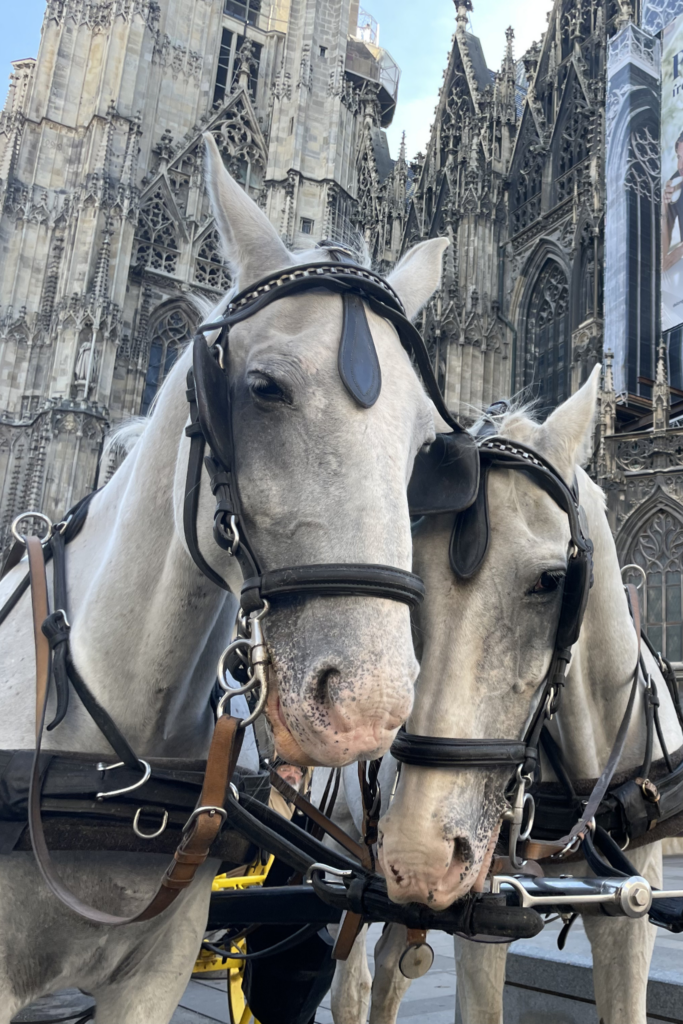
There we sat, front and center on red velvet cushioned seats, feet touching sawdust. My throat started to feel like the inside of an itchy knit sweater as I tried to appreciate the beauty of the Lipizzans galloping in the arena. We were so close we could even hear the world-famous white stallions let out not so elegant farts as they pranced in front of the crowd.
The Spanish Riding School is classified as one of the “Big Four” of the most prestigious classical riding academies in the world (think Big Ten, but with horses instead of football). Horses begin their training at approximately four-years-old, going through a rigorous program of three stages, taking between six and eight years to complete.
The art of breeding, training and riding Lipizzaner horses was inscribed on UNESCO’s list of intangible cultural heritage in 2015. The website even commends the fact that as of 2008, women have been allowed to train as riders at the school, a role traditionally reserved for men (…slow clap).
The school opens its doors to the public for the daily morning exercises at 10:00 a.m., as well as for more formal performances occurring most weekends. Tours are also available for horse mega fans, allowing you to get up close to the stables and take photographs (unfortunately not possible during the practice session we attended as to not disturb the training).
Address: Michaelerplatz 1, 1010 Vienna | Tickets: Tickets to the Spanish Riding School
Vienna State Opera
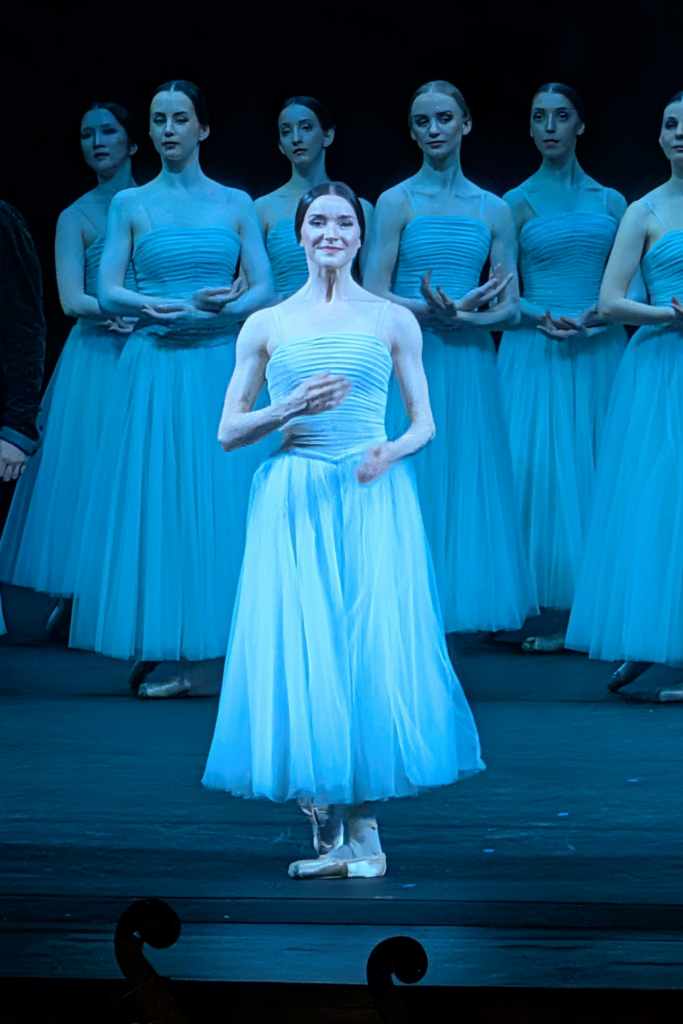
Giselle is perhaps my favorite ballet in history. It has everything a romantic ballet could ever wish to have- masses of white tulle gowns set in a rustic forest, where a young girl working in the vineyards yearningly dreams of spending time not picking grapes, but dancing arm in arm with her love.
And then shit hits the fan.
No longer is Giselle frolicking in flower patches, but instead plotting revenge on that deadbeat Duke who seemed like one of her kind – but instead was a nobleman already engaged to some other b****.
Giselle does what any normal girl would do. After dying from heartbreak, she gets a major glow up – joining a tribe of other dead women who are legends in Slavic folklore known as Wilis (not to be confused with Bruce Willis with a double L). The Wilis spend their time eerily dancing beneath the full moon, making men dance until they die.
The Vienna State Opera was a dream setting to see this gothic fairytale. I splurged on loge # 12, where front row seats cost approximately 165 Euros a piece, with seats slightly behind at a more affordable price of 75 Euros. Bloggers share one of the opera’s greatest travel hacks, which include standing room tickets, whereby interested spectators can purchase opera tickets for as low as 10 or 15 euros an hour before the show.
Vienna’s State Opera holds nearly 600 standing room seats, where you can view world class performances for the price of a sandwich.
Address: Opernring 2, 1010 Vienna | Tickets: Tickets to the Vienna State Opera
Burlesque at Mirage
We smelled funnel cake and heard the distant sounds of children screaming on thrill rides as we walked through the Prater, one of the oldest amusement parks in the world. Orson Welles famously appears in the Giant Ferris Wheel in the film The Third Man (1948). Today the red cabins that resemble vintage train wagons do not set the scene for Welles discussing mortality but rather organize romantic candlelit dinners for tourists who wish to eat overpriced weiner schnitzel while rotating in circles.
I felt like a kid in a candy shop as we walked through the Prater – wanting to stop every few minutes to have my fortune read in the mysterious looking fortune teller box (if you’ve seen the film “Big”, it looked exactly like Zoltar!) and run through the fun house with paintings of Empress Elizabeth and Emperor Franz Joseph I etched on the exteriors. However, our evening awaited other plans at Mirage.
If you love films such as Moulin Rouge or The Greatest Showman, I would highly recommend an evening at Mirage.
Performances happen every night and range from listening to the music of Johan Strauss to watching a gorilla strip and peel a banana for a spectator to eat out of his harry hand. Mirage offers tastes for every appetite; it just depends on what you can stomach.
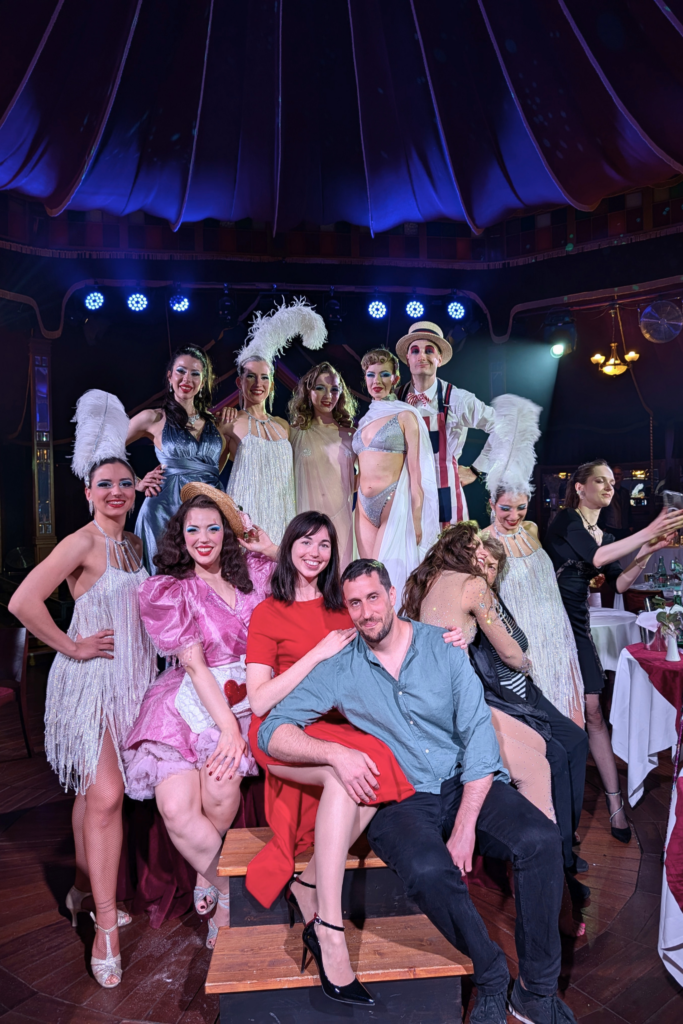
We were brave and booked tickets to Mirage’s Burlesque Spectacular while my family came to Europe.
“I’m in my 60s, nothing can shock me,” my mother reassured me.
As we settled into our red cushioned seats, we were welcomed a slim figured man walking on stilts, his head seemed to almost touch the red velvet tent that drooped around the room, creating an intimate atmosphere. Burlesque performers in rhinestones, feathers, and even a leopard cat costume performed one by one, my favorite being a take on Dita Von Teese’s famous carousel horse act.
Address: Prater 75, 1020 Vienna | Tickets: https://www.mirage.wien/en
Wine tasting in the Wachau Valley
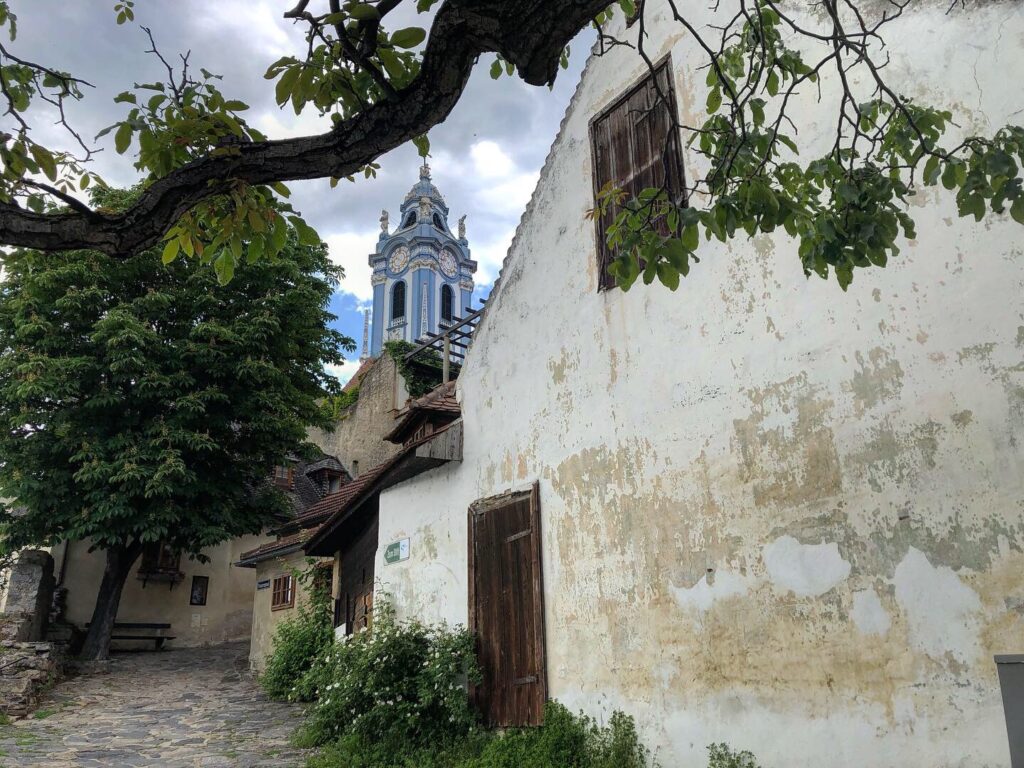
One of the most vivid memories I have from visiting Vienna was on my first solo trip. After multiple dinners alone, and several surprised looks when requesting a table for one, I decided to to push myself to be social, signing up for a bike wine tasting tour in the Wachau Valley.
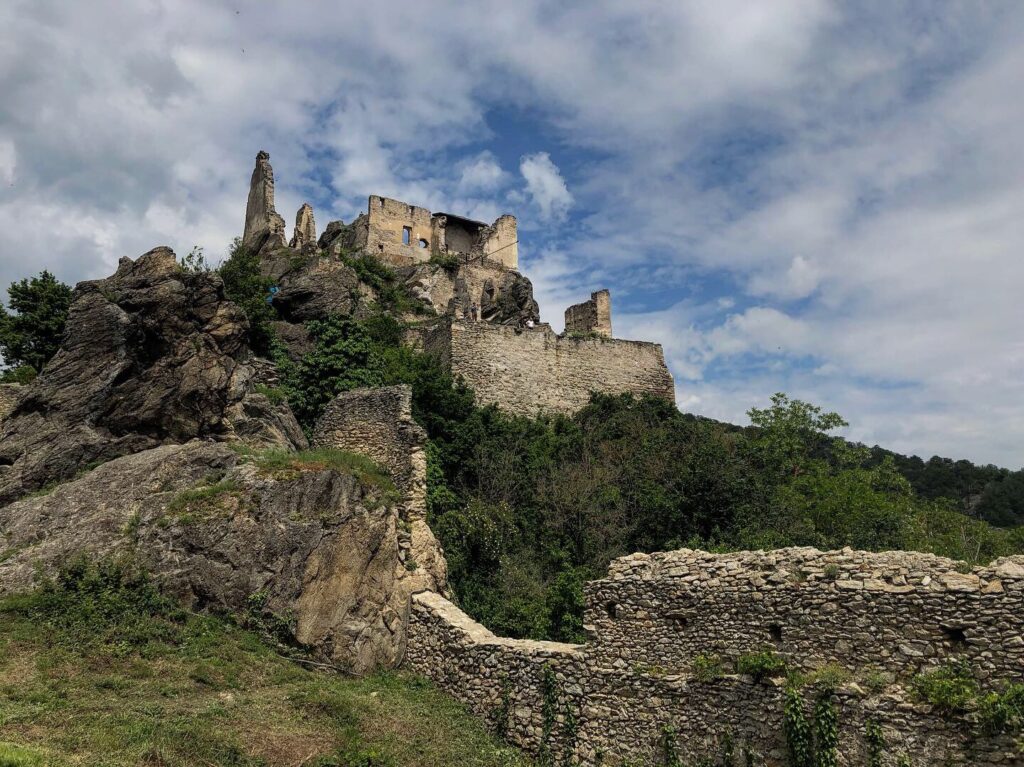
The land running along the Danube River has earned the title of UNESCO world heritage site for its preservation of medieval monasteries and castles and its continued use of winemaking, dating back to prehistoric times. The valley banks are ideal conditions for producing dry white Rieslings and Grüner Veltliner.
Lifesize dollhouses painted in pastel shades of blue and yellow appeared in the vineyards, crisscrossing across rolling hills of apricot orchards and Romain ruins. I wanted to stop every two seconds to take photos but deemed the idea too risky as I was 1.) on a bike, and 2.) slightly tipsy.
The tour (booked here) seems like a hefty price, although keep in mind that it encompasses 11 hours of transport to and from the Wachau Valley, bike riding (rain or shine!) through charming villages stocked up to the brim with apricot soaps and liquor, and visits in between for tastings of local wine.