Tuscany, My Old Friend
Some places in the world are special because major life experiences occurred there, engraving the city into our brains like a stain of red wine on a white carpet. Perhaps you shit your pants on a red double decker bus in London, or some f***boy kicked you out of his place in Paris at 3 a.m. because you wouldn’t put out — whatever the reason, sometimes places become old friends.
Tuscany has begun to feel like someone who accompanies me in some of my life’s biggest moments. The first was in Florence, where Laurent and I went for a walk along the Arno River, giddy on young love and Aperol Spritz. We passed a small park with a church and decided to take a break on a bench.
Laurent thought it was funny how I hadn’t made any snide comments lately about us living together without being wed — a clandestine relationship, as far as family members in rural America were concerned. I told him I was happy, and that as long as we trusted one another and were content as we were, what was the point of making our union official on paper?
There was a moment of silence — Laurent, perhaps, wondering why he’d gone through all the hurdles of buying a diamond ring and meeting my entire family in the U.S., even my fanny-pack-wearing Great Aunt Sarah, Walmart’s most loyal employee.
The second instance in Tuscany was a more somber occasion. A yoga teacher turned friend had generously offered me a spot on a yoga retreat in the Tuscan countryside to celebrate Samhain, when the world of the living and the spirit world are said, in Pagan tradition, to be at their closest. I didn’t ask questions, and found myself sharing a room with a Scandinavian woman who went outside at night to sing under a full moon.
I’d received the news a few days after my grandfather’s passing. He was sick, and it seemed a part of the natural circle of life. Nevertheless, I felt like I was walking through quicksand. I didn’t want to talk to anyone, and found myself wondering if there really is another side to all of this.
I packed a small bag and took two trains — Geneva to Milano, then on to Florence. I stayed a night in a hotel before joining the flexible forty and fifty-something yogis, and decided to take a walk through the city by myself that evening.
It was during this walk that I stumbled on a shop window filled with Italian leather handbags and shoes. One item, though, gave me goosebumps: a signed Oklahoma Sooners helmet and football, displayed in a shop window in a country that doesn’t have American football. The Oklahoma Sooners were my grandfather’s favorite team. Like Audrey outside Tiffany’s, I stood transfixed. I couldn’t walk away, and started crying alone in the street like a child who’d dropped her ice cream.
When it came time to find a spot for a combined August birthday celebration — Polina’s on the 13th, mine on the 31st, inverse numbers, fire and earth, two opposites in every possible way that somehow complement one another — we looked for a place where the sun shone and the wine ran freely. Tuscany, like an old friend, beckoned us in with outstretched arms.
Stay at the Tenuta Sant’Ilario
We caught some flack for attempting a six-hour road trip to the Tuscan countryside for a weekend. I hadn’t driven in well over fifteen years, so Polina was steering the ship. Having grown up in rural Russia and middle America respectively, we took the surprised remarks of our European friends and family — used to short distances and weekends measured in one or two hours — with a grain of salt.
Like the fork in Robert Frost’s poem, the road suddenly split in two: to the left, a paved road lined with homes; to the right, a downhill track through undergrowth, twisting olive trunks, and bitter olives (we knew they were bitter because we’d tried tasting one straight off the branch — a big mistake). A small sign was staked into the dried August dirt, printed in caps: “RIGHT WAY” with a green checkmark, “WRONG WAY” with a red X. Unsure whether to trust the sign or the GPS, Polina and I took the road less traveled — the one meant for hikers and dog walkers.
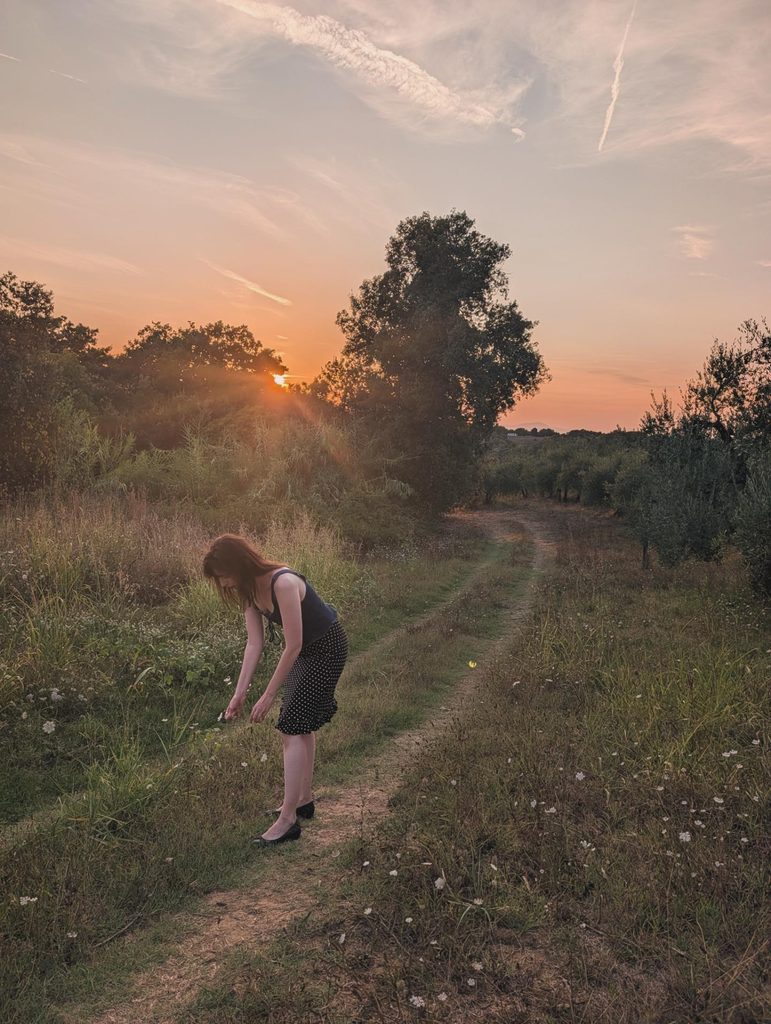
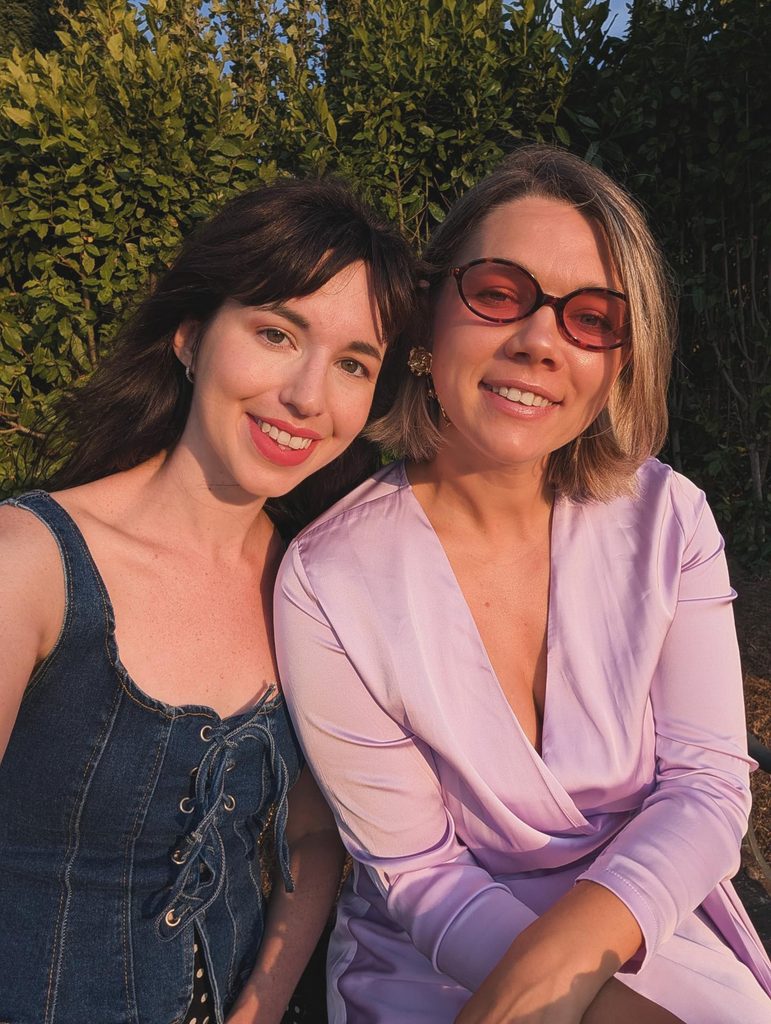
We instantly regretted trusting GPS over our own instincts, having followed the path marked, in no uncertain terms, “WRONG WAY.” I found myself wondering if Tuscany had inspired Ben & Jerry’s Rocky Road. Clods of dirt banged against the car’s undercarriage as the road dipped and then rose sharply, grooves jerking the wheel left and right beneath us.
At one point I had to remind myself to breathe. I looked over at Polina — a Russian warrior who’d grown up after the fall of the Soviet Union without running water, the kind of woman who carries a knife when traveling somewhere dangerous — and noticed her hands trembling at the wheel.
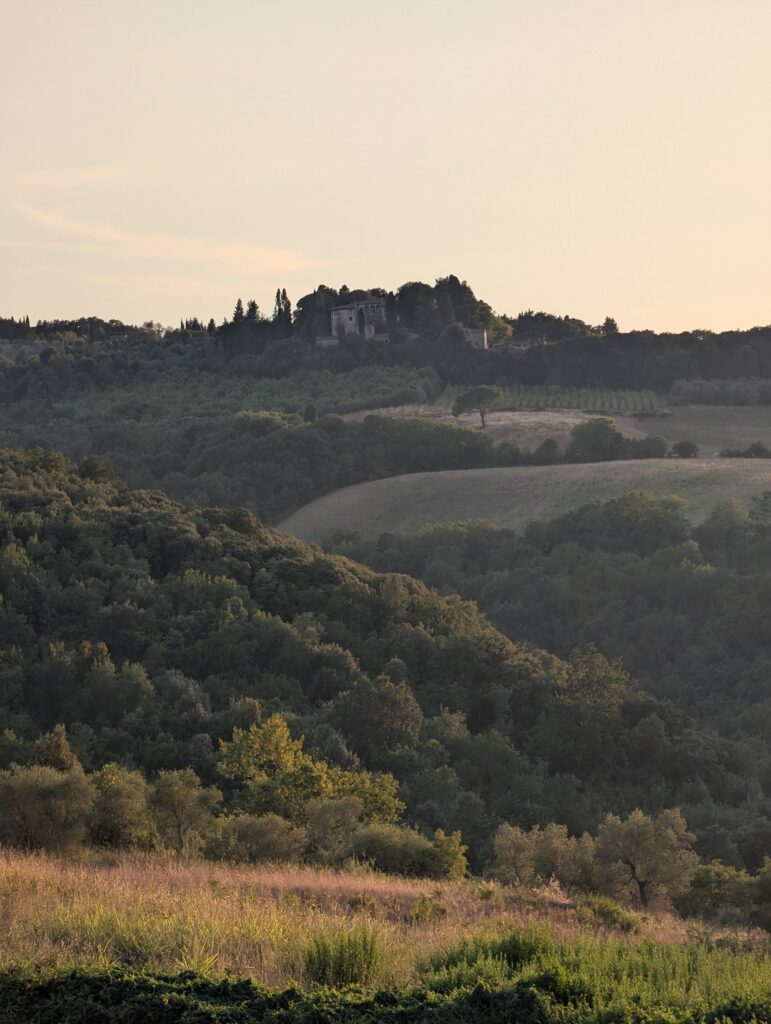
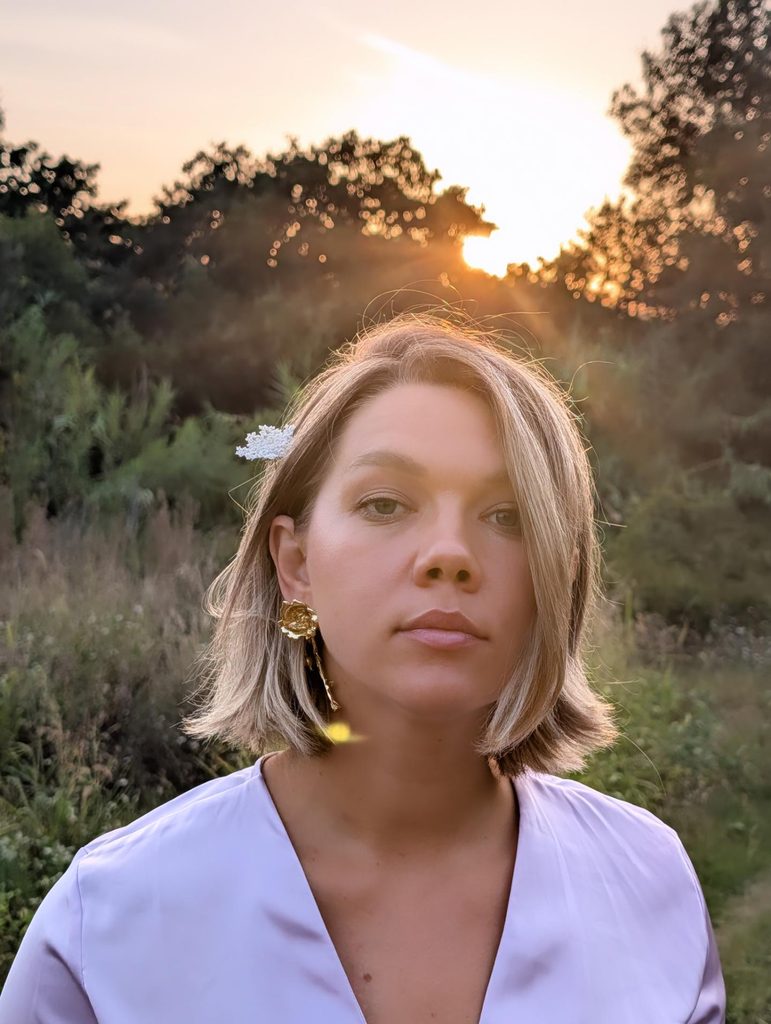
Nervous and feeling useless, I turned to the only tool I had: relentless optimism, which is exactly what everyone wants to hear when things are going to shit.
“Listen, cars are made for this sort of thing! We can do it!”
“No, Laura. My car is NOT made for this.” Polina snapped — the long drive from France in 40°C (104°F) heat, layered with genuine fear for the collapse of our only way home, catching up to us.
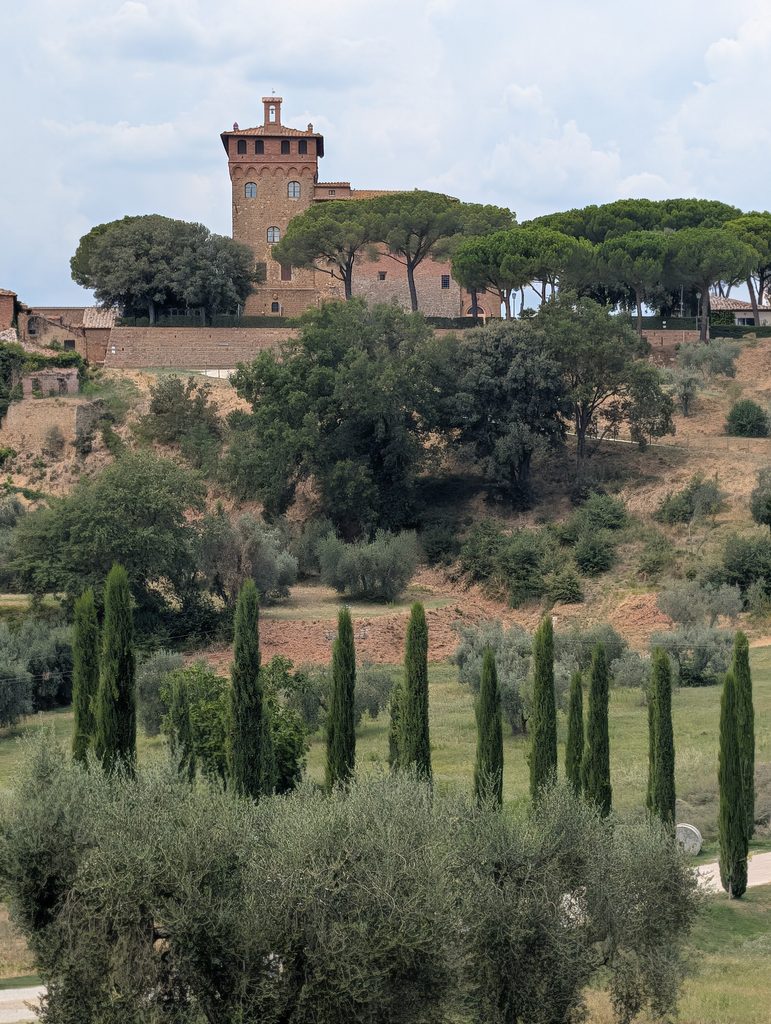
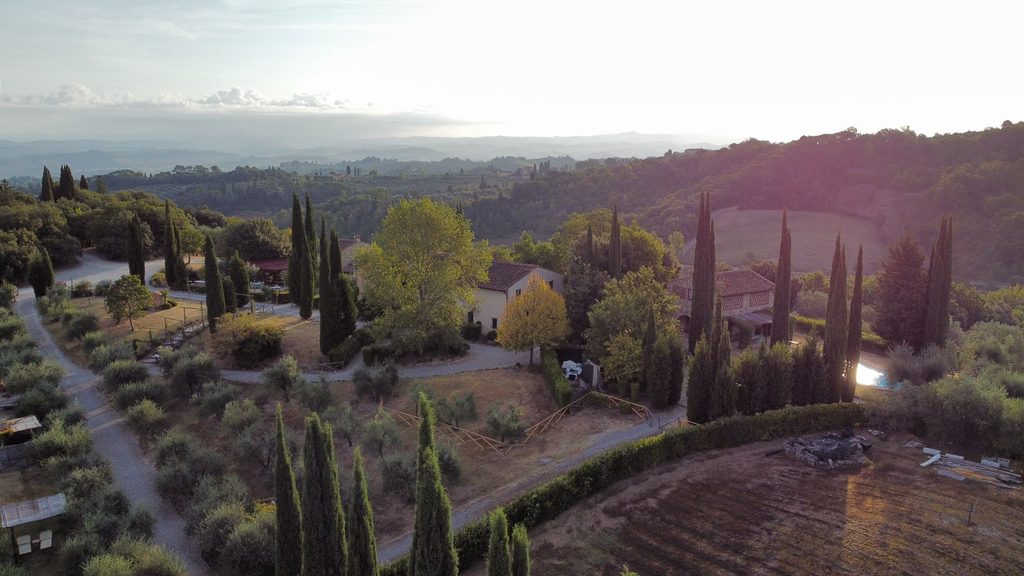
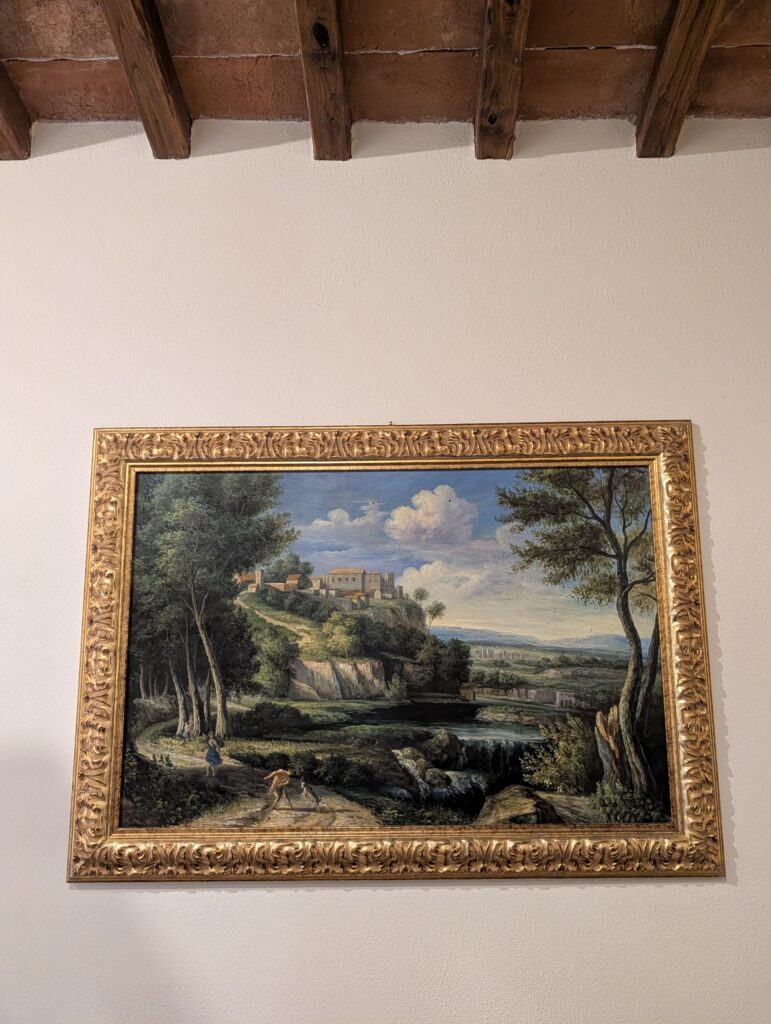
Then, from the gravel, a paved road appeared — was this an illusion, two travelers on edge after crossing the Sahara, hallucinating a watering hole that was really just more dry sand? We weren’t dreaming. The paved road led to a reception area with large clay vases and cypress trees, sixty hectares of land dotted with olive groves and vineyards. Checking in to the Tenuta Sant’Ilario, I asked about a painting that looked like the estate itself, rendered with mythological creatures in the surrounding forest. Its golden frame made it look museum-worthy, but it turned out to be one of the artefacts found on-site when founders Franca and Andrea purchased the estate — a former 12th-century fortress.
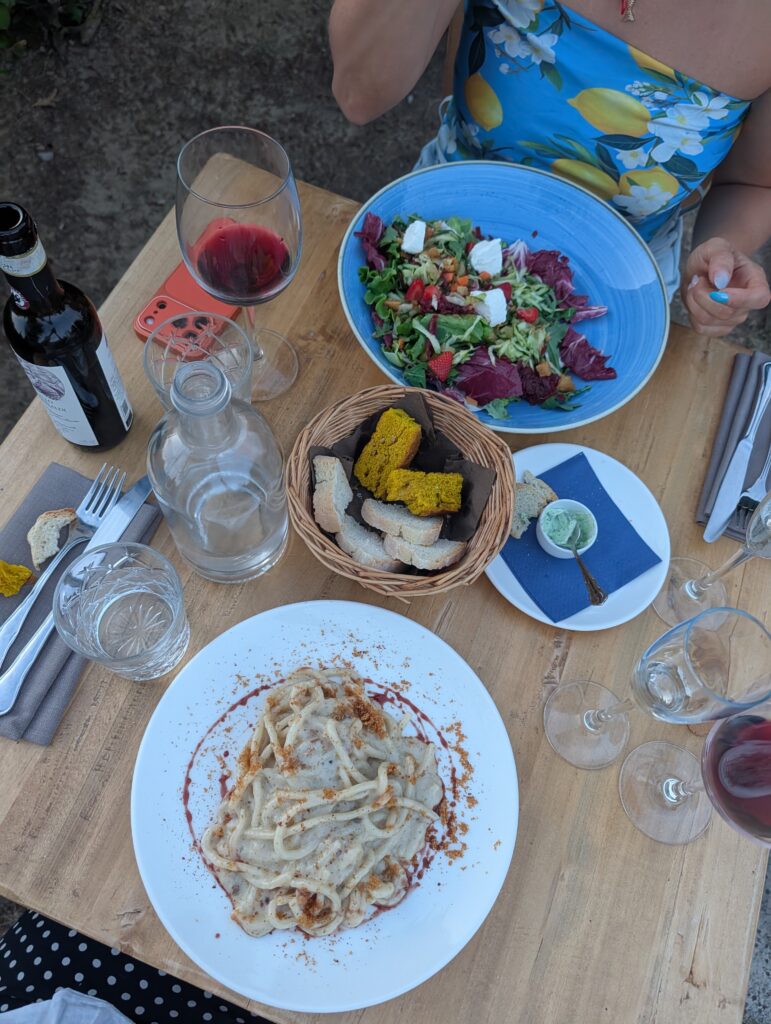
With two days ahead of us, we spent the first afternoon by the pool, sipping Aperol Spritz and catching up on everything we’d missed over the last four months. We sprawled on lounge chairs overlooking the olive groves and cypress-lined gravel road, the dust that coated everything we wore outside turning my ballet flats a soft shade of camel.
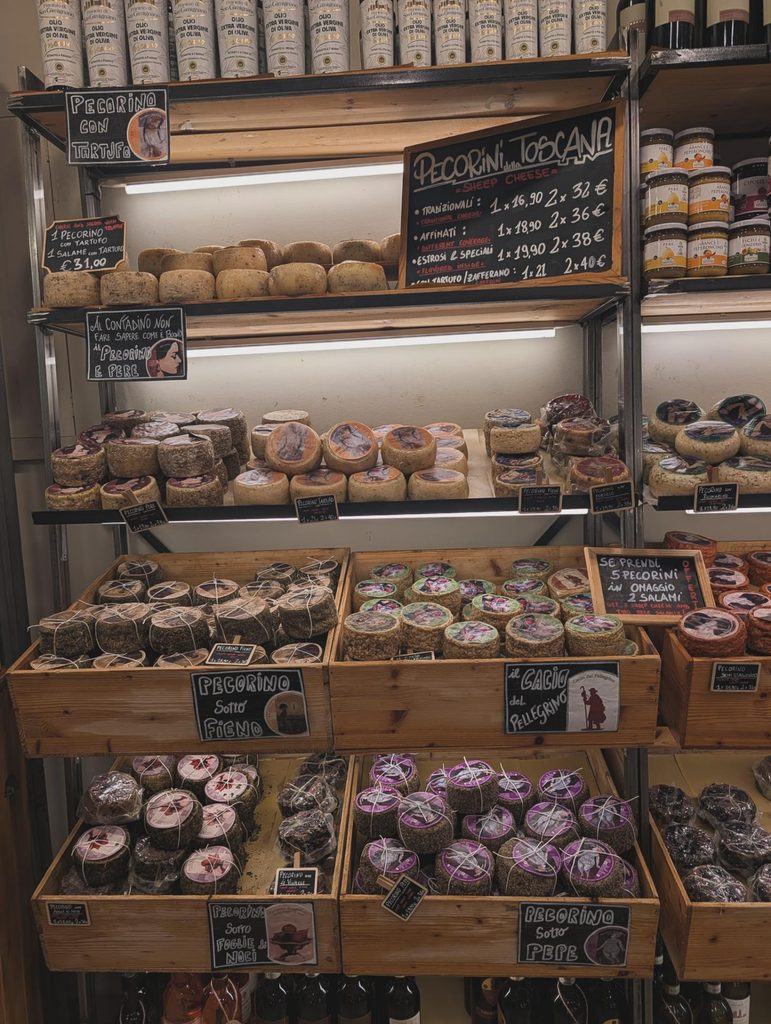
Surrounded by Dutch and German tourists (we noticed license plates from both throughout the weekend), we rejoined the same poolside crowd that evening at the estate’s farm-to-table restaurant, Trattoria Toscana Sant’Ilario, for a three-course wine tasting on our last evening in Tuscany. I was thrilled to see cacio e pepe on the menu — what looks like a simple dish of Pecorino Romano and black pepper, but requires a precise chemical balance to become, in Anthony Bourdain’s words, “the greatest thing in the history of the world.”
More wine tasting at Cesani Winery
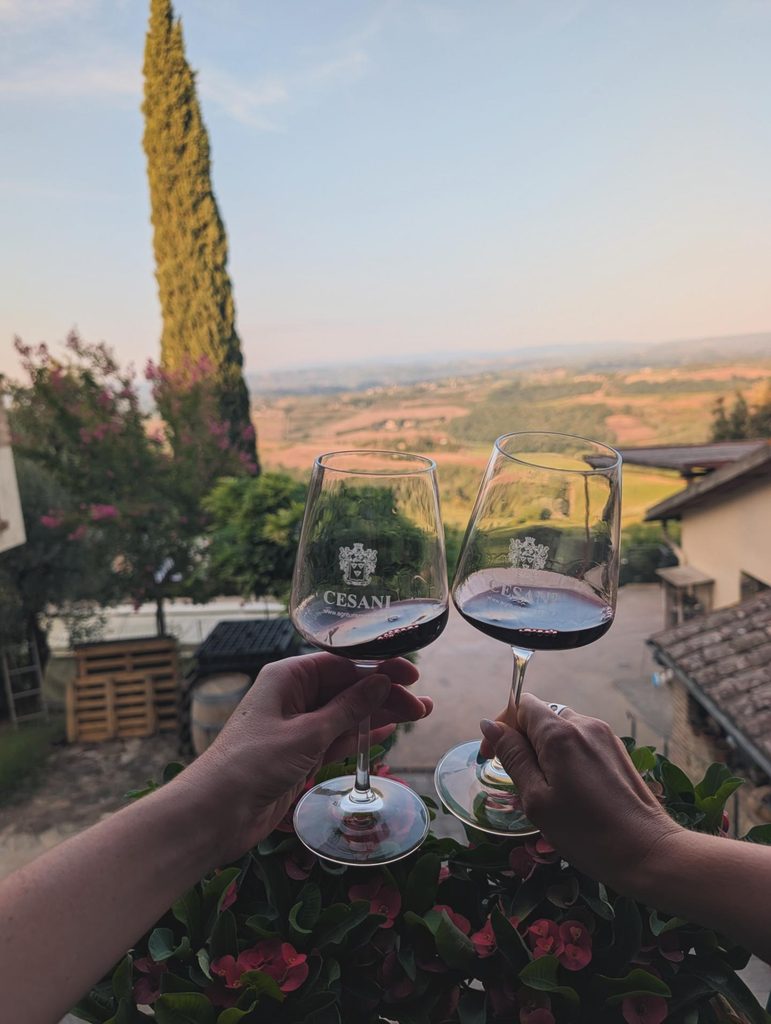
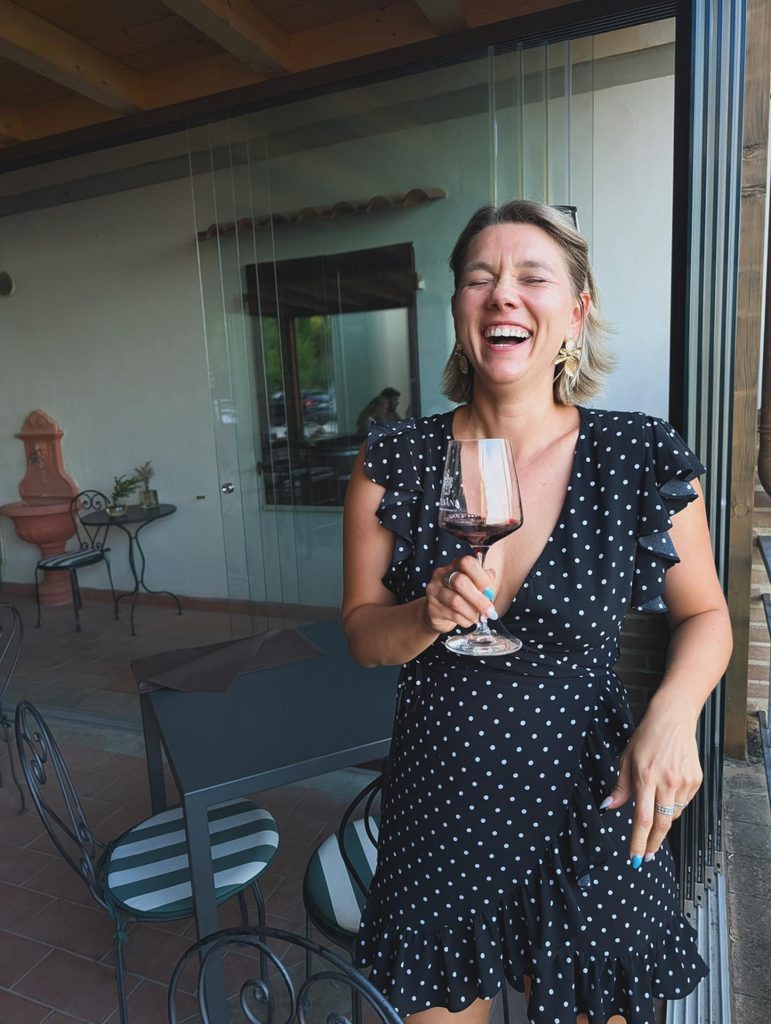
“Here we can’t really separate wine and food,” our sommelier Rikka told us. “A little wine every day is seen as normal.” Originally from Finland, Rikka joked that the Finns had kicked her out for talking too much — her explosive laugh made the honeymooning couples nearby jump. Cesani Winery had the charm of a family-run business, also proudly managed by a woman. We tasted five of their wines, paired with charcuterie and unsalted bread, a Tuscan tradition going back over 700 years. The star of Tuscan wine is the Sangiovese grape, giving hints of cherry and plum to reds like Chianti.
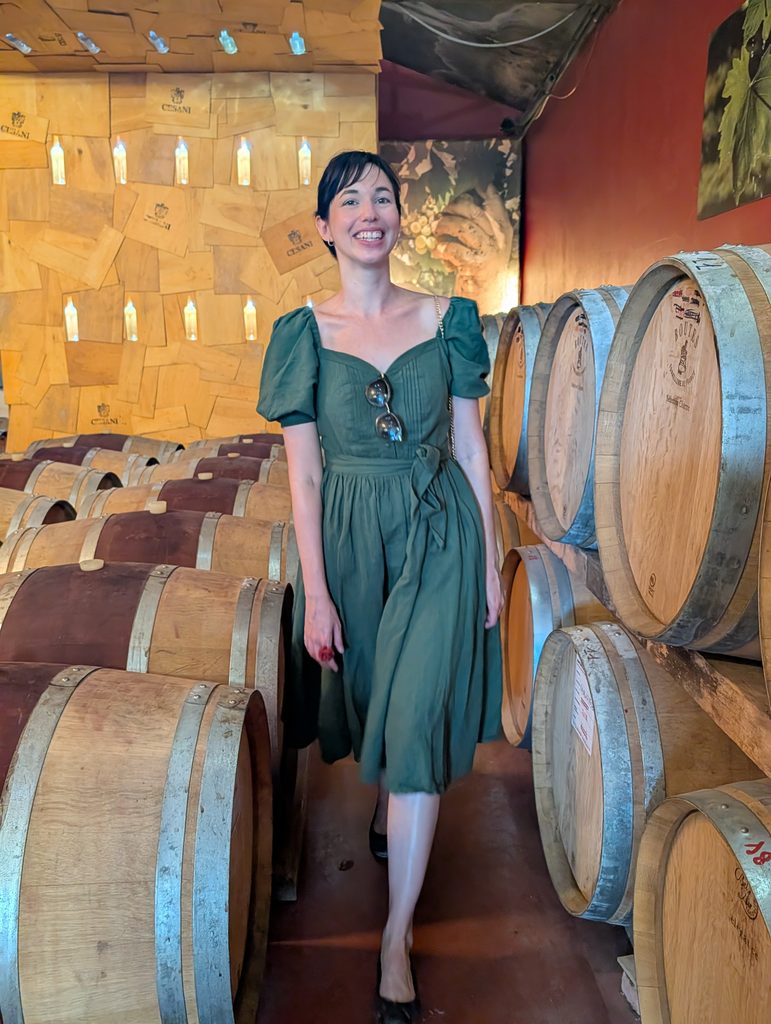
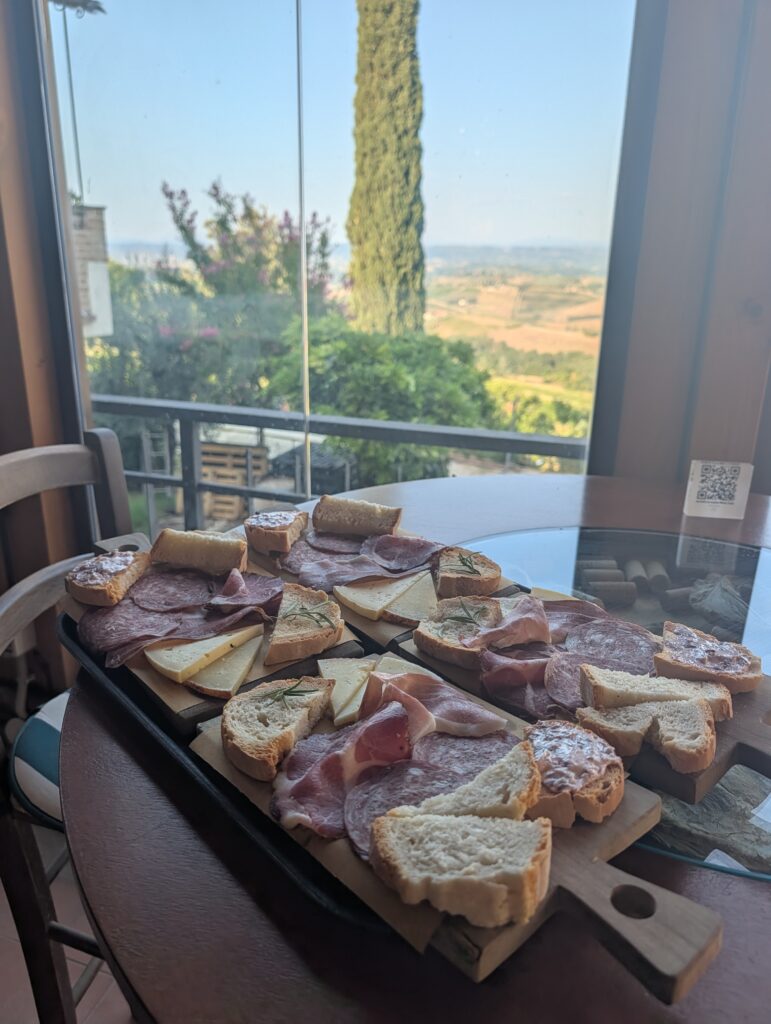
I found my palate favoring licorice, cherry, and plum — reds over whites, despite the heat wave. We even tried the winery’s rosé, introduced in 2007. “Thank goodness for young people,” Rikka said, explaining how hard it had been to get Tuscans to warm up to rosé in a culture that cherishes tradition.
Sunrise in Siena
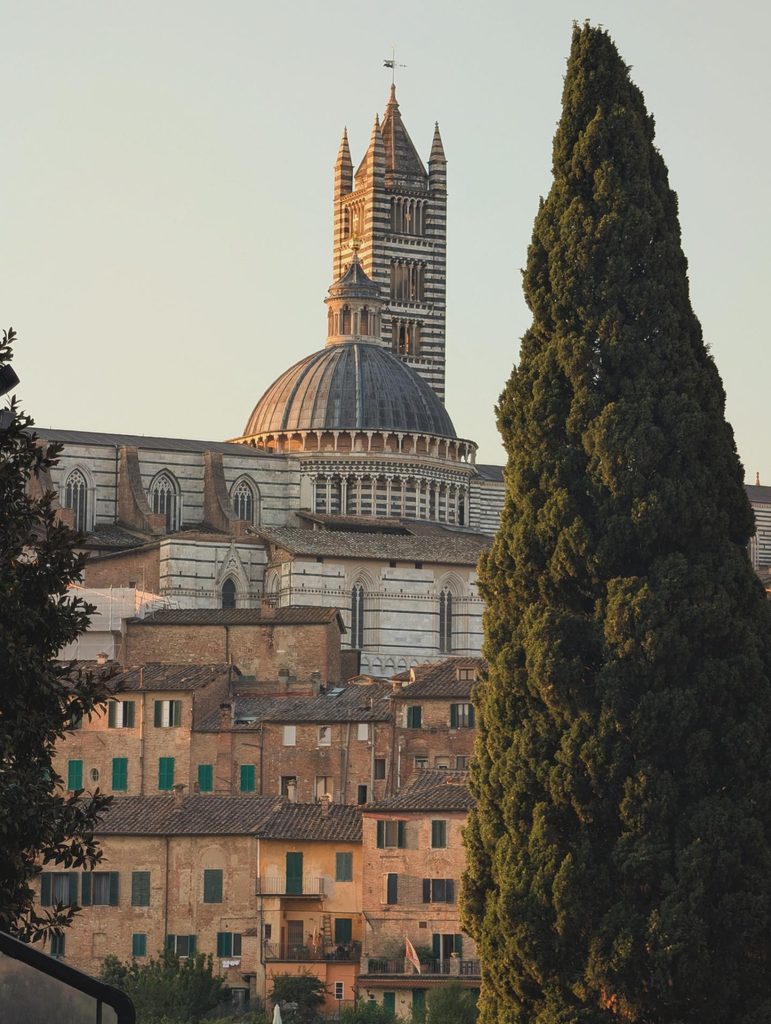
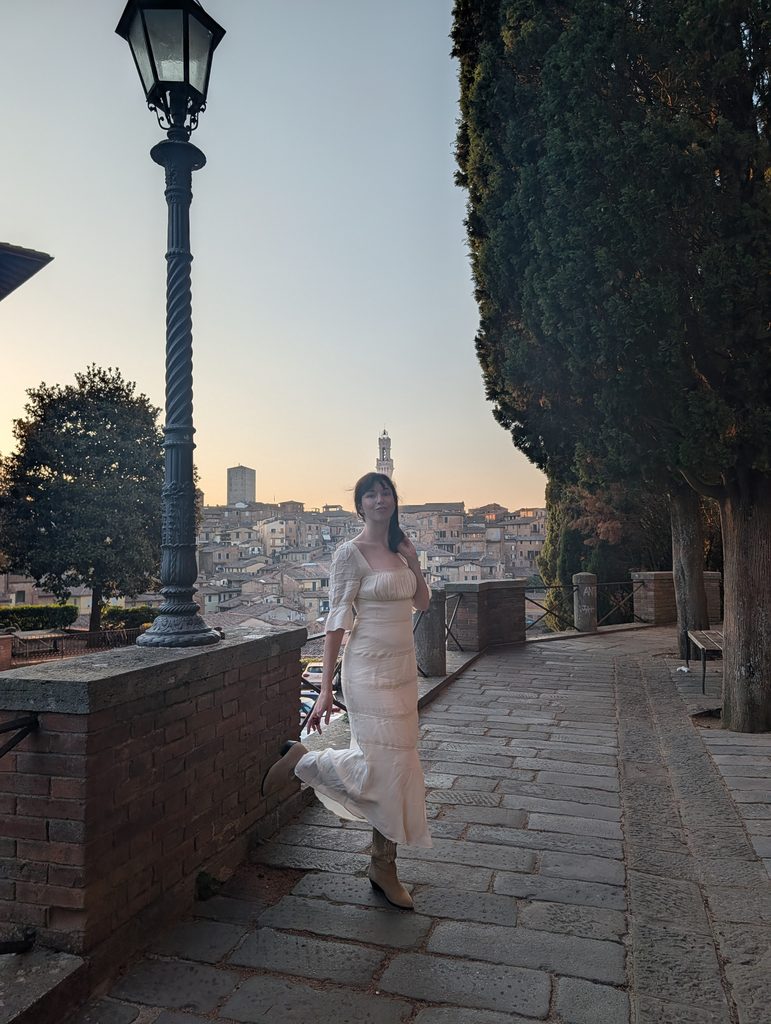
The alarm went off at 4:45 a.m. — a small act of self-torture we convinced ourselves we’d regret forever if we didn’t watch the sun rise over Tuscany, two bloggers perpetually out of phone storage. We threw on sundresses, loaded up the car, and let the sound of cicadas ease us into the day. We were headed to Siena, where we’d learned that on August 16th, a horse race dating back to medieval times is run through the city’s main square. The race lasts ninety seconds, with ten of the city’s seventeen contrades, or neighborhoods, competing.
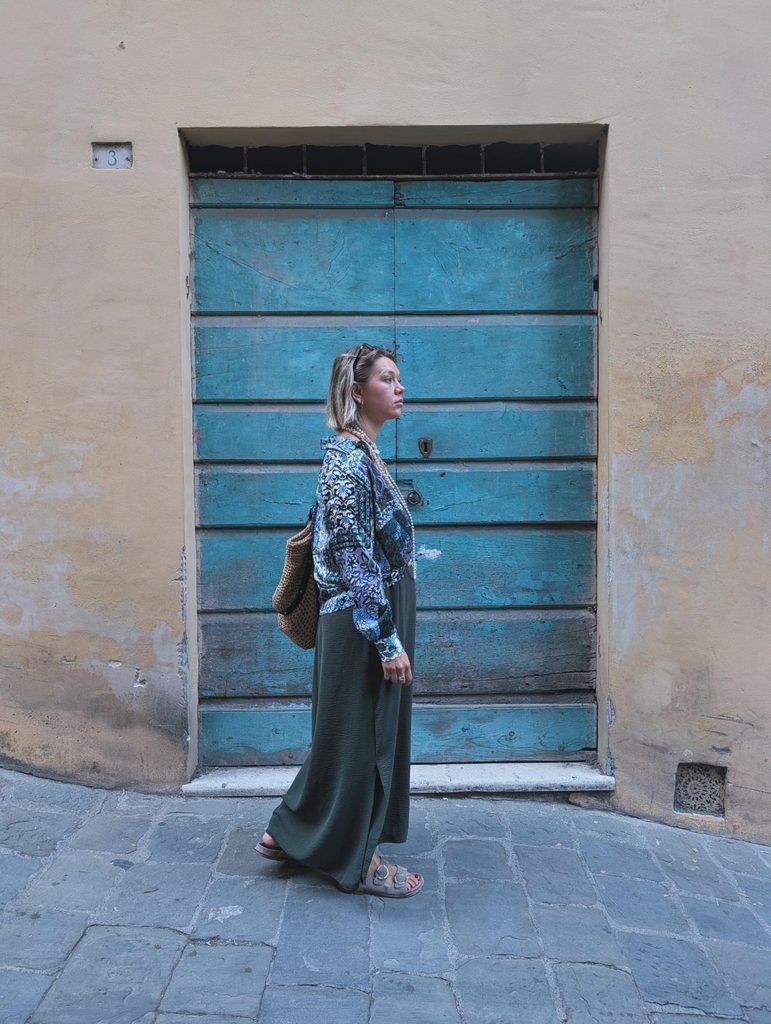
We hadn’t realized we’d be in Siena on one of only two days a year this event takes place — a race that carries enormous local pride. By 7:00 a.m., families in green silk scarves bearing a goose, symbol of the oldest contrada, were already arriving at the square, queuing in the sweltering heat for a race that wouldn’t start until 5:00 p.m.
Espresso in Monteriggioni
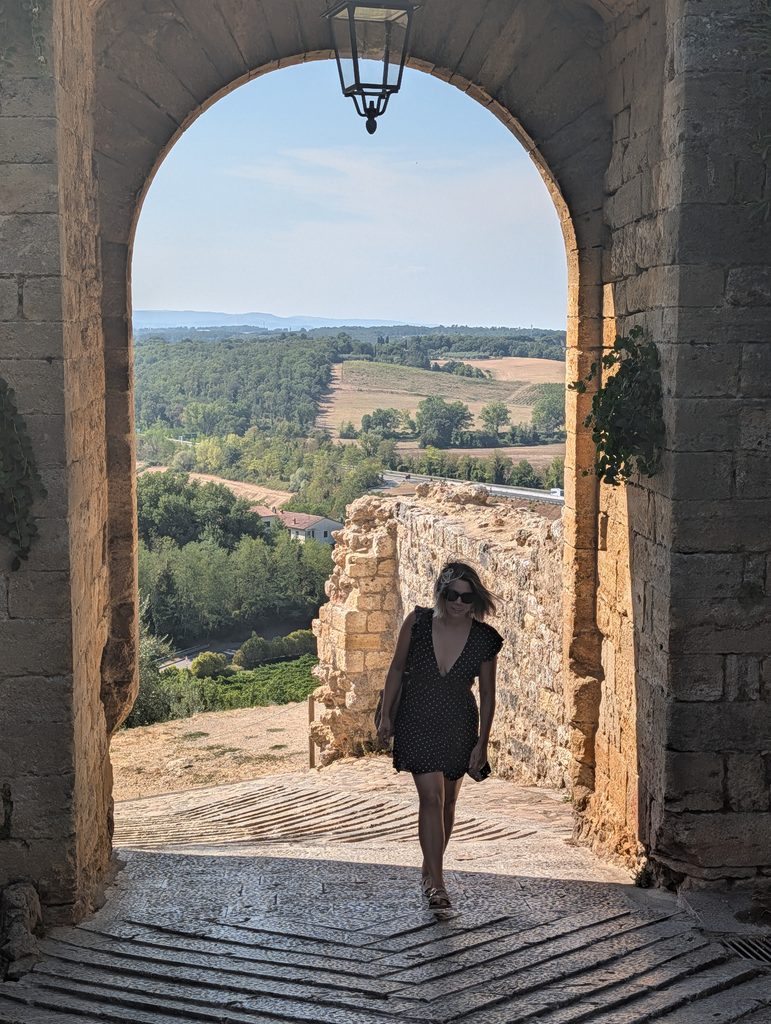
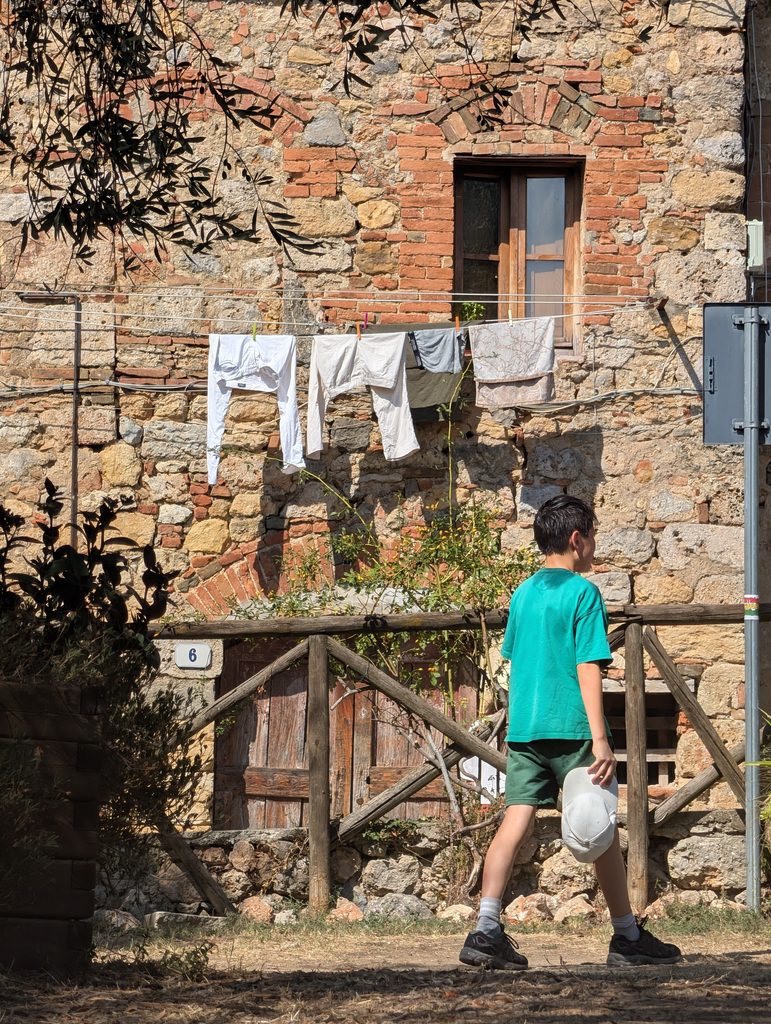
We stopped in Monteriggioni to look for a coffee and a toilet. Not necessarily in that order. Preserved by a medieval wall, which you can walk around for 4 euros, this village can be well visited within an hour, and that’s if you’ve taken the time to pop in the unique shops along the way. I later learned that it inspired a famous video game, Assassin’s Creed, if you’re into that sort of thing.
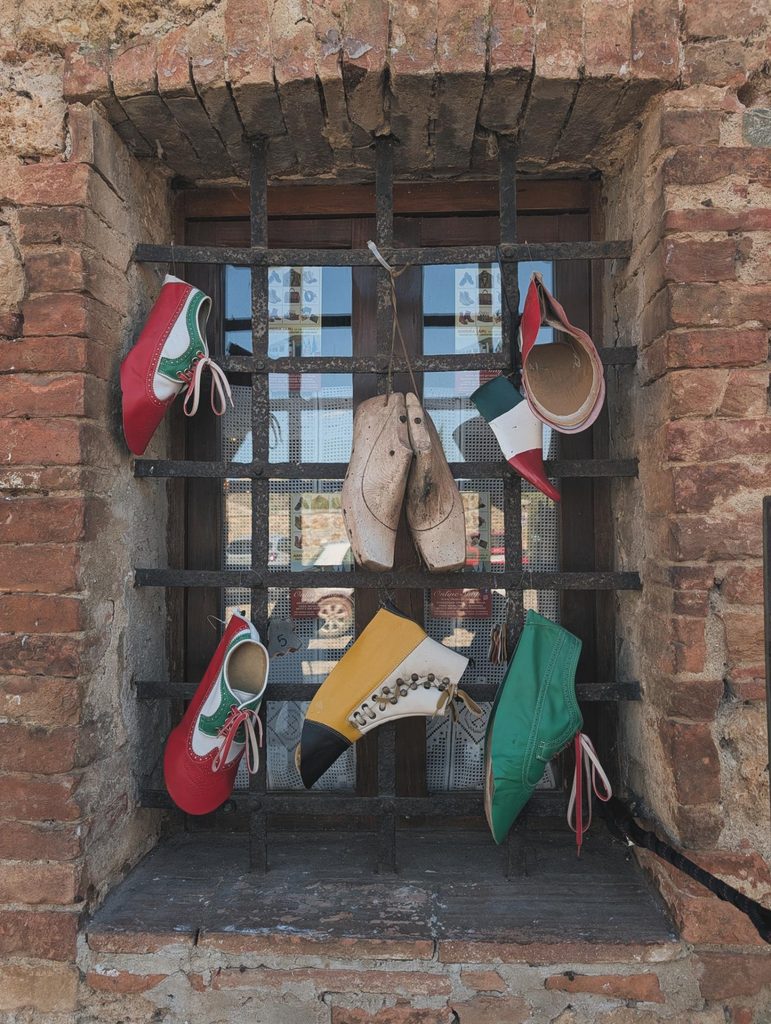
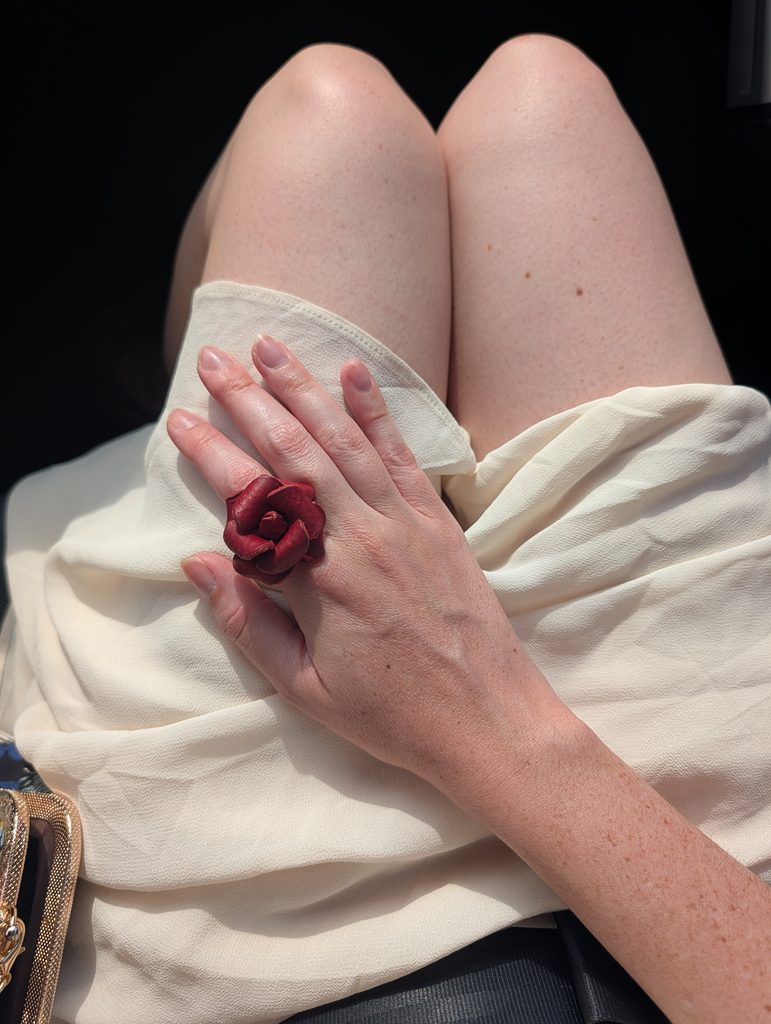
This may have been my favorite stop over the weekend. It sounds cliché, but I really did feel that we had transported into another world. The small village center has an ancient stone well. Small shops sell unique leather goods and clay garden decor (I picked up a ring with a red leather rose; Polina added to her dish collection). While Tuscany draws tourists all year round from all over the world, Monteriggioni felt quieter and more lived in. I could hear Italian families eating on the terrace. I hope it remains that way.
Day trip to Montepulciano
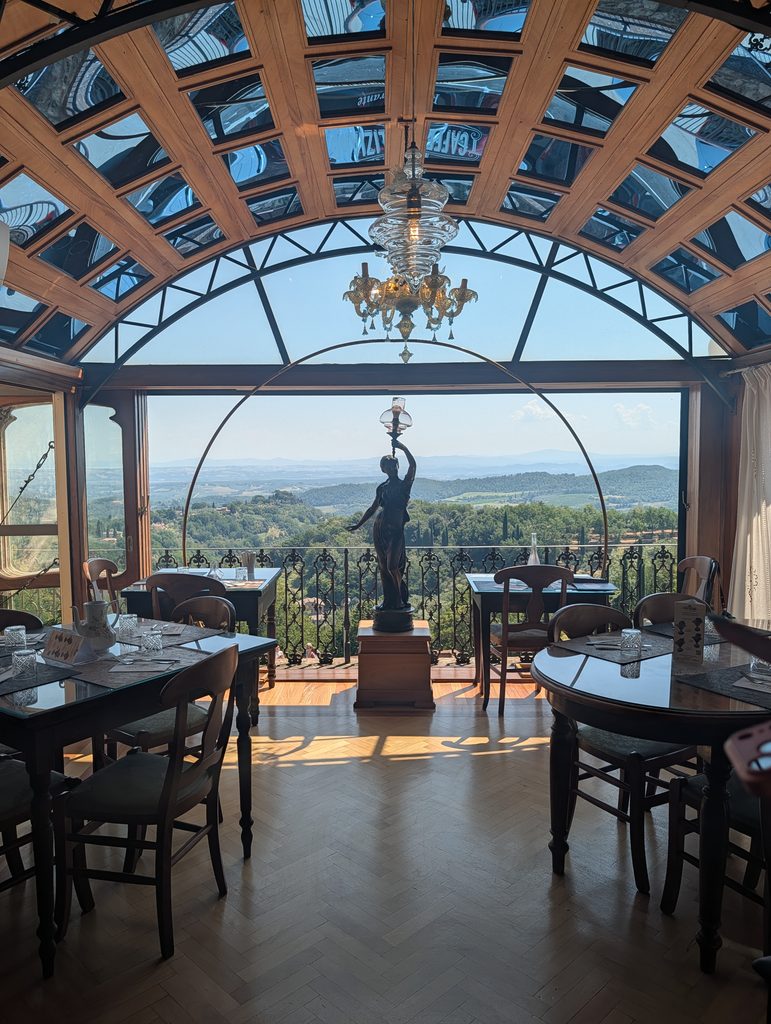
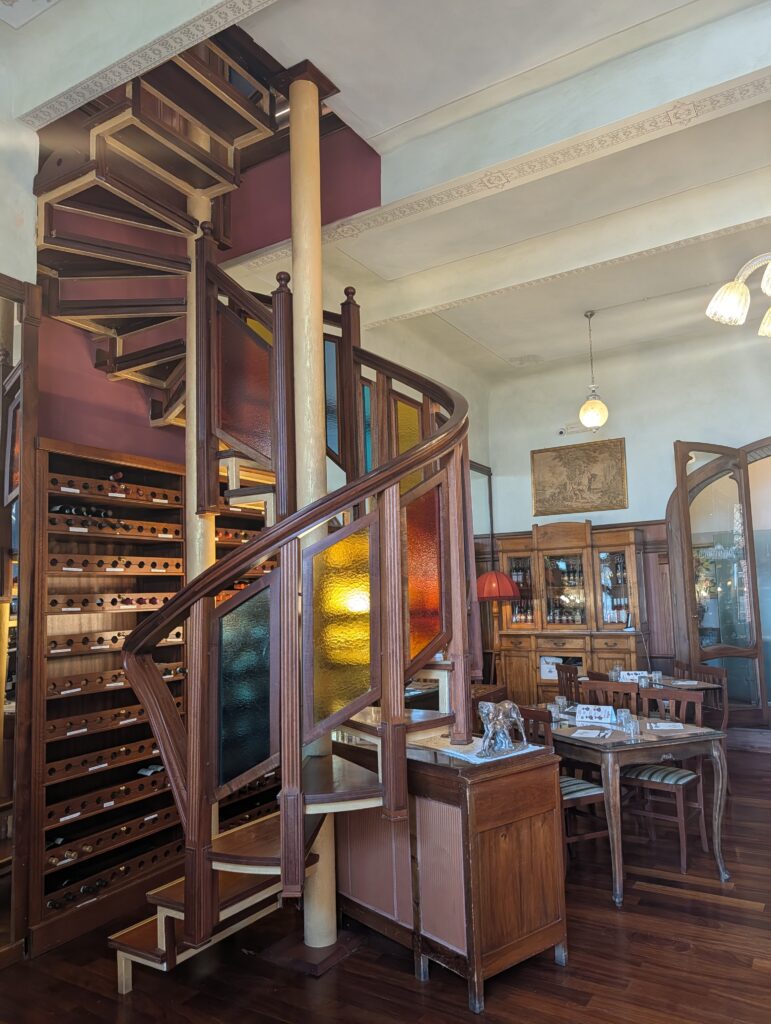
My knowledge of Montepulciano begins and ends with the fact that its velvety red is my favorite wine — so walking through the actual village felt a bit like meeting a celebrity. By the time we arrived, the 4:45 a.m. wake-up had fully caught up with us. We’d stopped along the way to fly Polina’s drone over a stretch of dreamy cypress trees, which hadn’t helped.
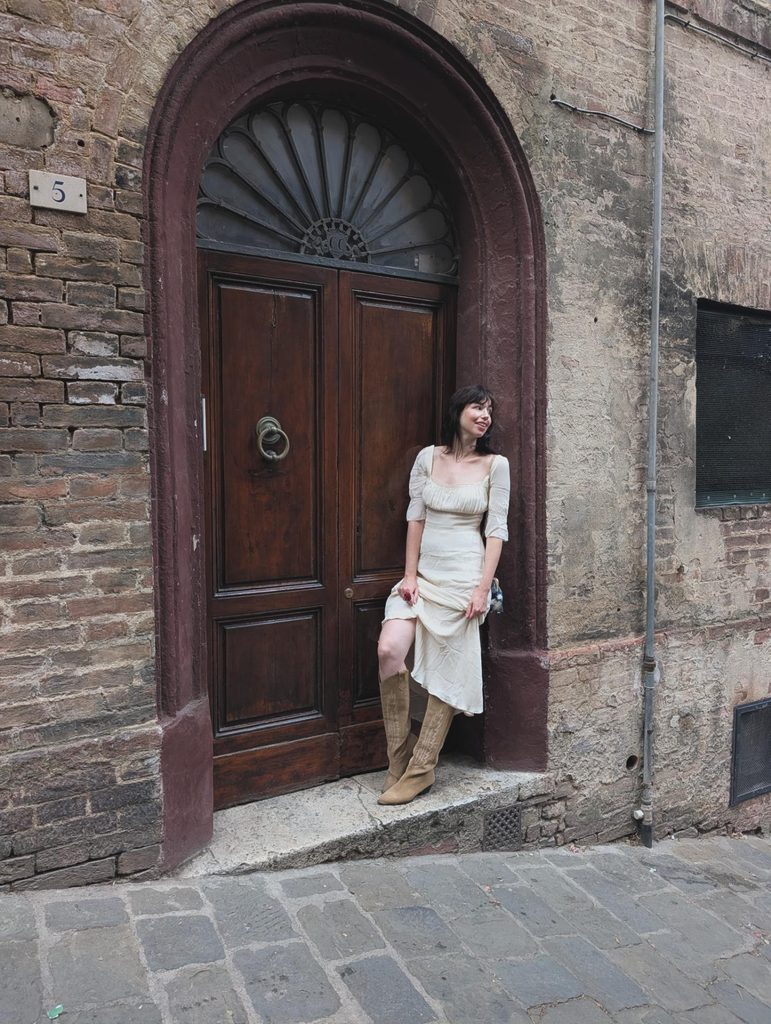
Our visit was entirely unplanned — we simply showed up. The town was loaded with tourists, wine tastings on offer at nearly every restaurant, men on street corners handing out flyers for excursions — an alcoholic’s Disneyland. We ducked into a few shops, my feet aching for something more forgiving than the photogenic suede cowboy boots that had spent all day covering my sweaty calves.
A restaurant with art deco exteriors stopped us in our tracks, its terrace looking out over the Chiana Valley. It turned out to be historic — open since 1868, once a haunt of Italian cultural figures like director Federico Fellini and Nobel Prize-winning poet Giosuè Carducci.