Confidence on Your Sleeve: Princess Diana’s Revenge Dress in Geneva
Money has a distinct smell.
A concoction of new car seats, Aesop soap, Scandinavian minimalism and leather.
I took a deep breath before setting foot into the Mandarin Oriental, a five-star luxury hotel along the Rhone River. Some fleeting feeling was ignited by the sight of a nine-year-old with eyes glued to an iPhone 18, his Chanel-bag-holding chaperone chatting on an identical mobile, before they were escorted by two security guards with earpieces to a sleek black vehicle.
Something in the pit of my stomach churned, as if to warn me that my cat-hair-covered black coat and scuffed boots did not belong beyond the revolving glass doors before me.
Belonging. As humans, we crave acceptance from a tribe, a hunger embedded in our being since the earliest days of evolution.
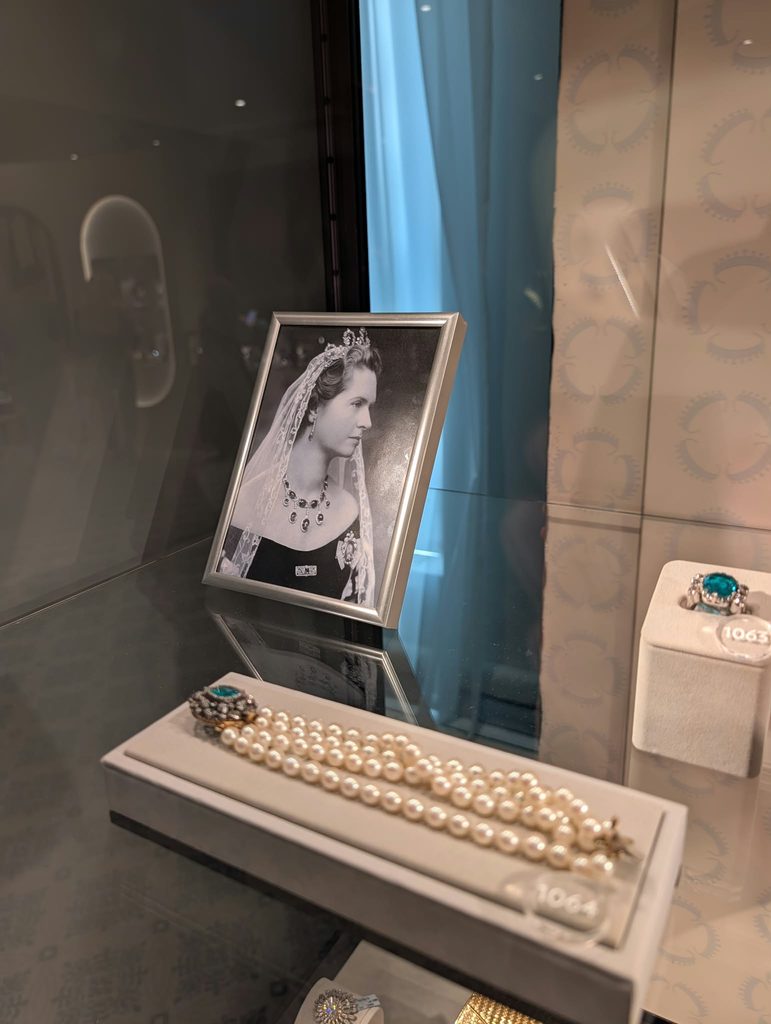
As I stepped out of my comfort zone into Sotheby’s luxurious exhibition to admire Princess Diana’s historic revenge dress, I wondered just how out of place Diana must have felt within the royal family.
Diana, Princess of Wales, passed away on my birthday in a car crash in a city that I credit with changing the direction of my life: Paris.
Like so many ’90s kids, I had the Princess Diana beanie baby. But mostly, I had this feeling that Diana was someone I knew. She showed emotion: she walked through a minefield in Angola and hugged children with HIV, breaking a long-held stigma that the disease could be transmitted through touch. Her eyes expressed empathy, and her pain was heard in her voice as etched on her body.
A princess, yes, but even more so, human.
Perhaps this is why her clothing still fascinates us – how the mere sight of a piece of fabric can give us chills.
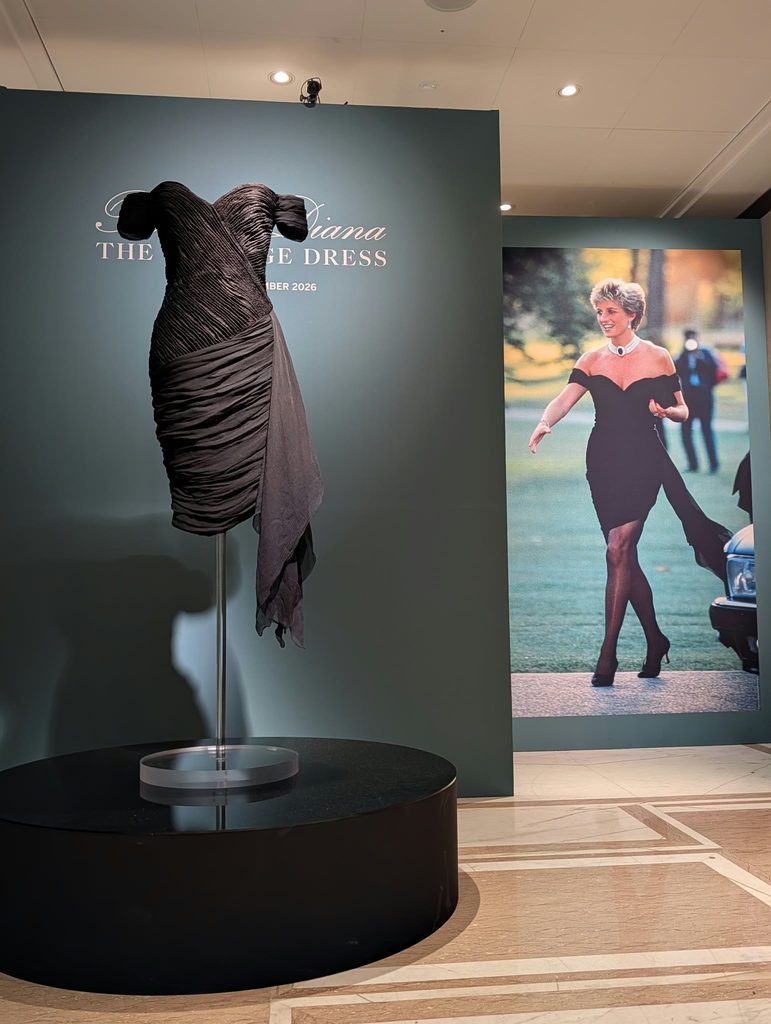
For six days, the Princess’s iconic revenge dress was on display in Geneva following stops in London and Hong Kong. The silk crepe and chiffon fabric fluttered above a small fan. There was no glass casing, so visitors could see every detail up close, while a security guard in the corner watched countless women film, photograph, and pose next to the dress.
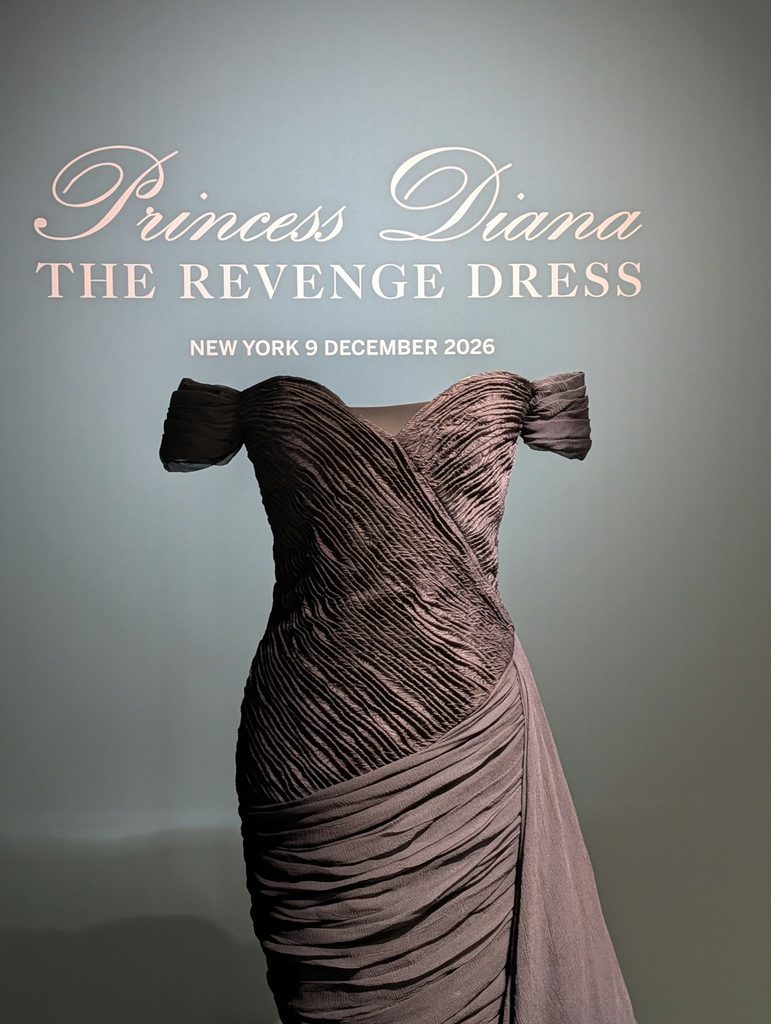
The dress will now be carefully packed and shipped to New York City, where, for the second time in its life, it will be auctioned during Sotheby’s Luxury Week on 9 December. The dress is expected to sell between US$ 150,000 and US$ 300,000, and rumor has it that celebrities Lady Gaga and Kim Kardashian are both looking to bid. The dress was previously auctioned in June 1997, two months before the Princess’s death. It was included in a collection of 79 gowns to raise funds for breast cancer and AIDS charities.
How did a dress become a pop culture moment? In June 1994, Prince Charles openly confessed in a televised interview to having cheated on Diana while they were married. The couple was already separated at the time of the interview. Charles’s strategy was a way of controlling tabloid speculation about his relationship with Camilla Parker Bowles. A little over a year later, in a BBC Panorama interview recorded without Buckingham Palace’s knowledge, Diana confirmed that there were three people in their marriage, which had become “a bit crowded.”
Following Charles’s televised confession, Diana was scheduled to attend a party hosted by Vanity Fair at the Serpentine Gallery in Kensington Gardens, an event she had initially declined but decided to attend after reports of Charles’s infidelity.
Black was reserved for mourning by royal protocol, which made her choice all the more pointed. Instead of purchasing something new, she pulled a dress from her wardrobe that she had owned for three years. It was designed by Christina Stambolian, an Athens-born designer of Armenian heritage. The dress was off the shoulder, with a hem just above the knee, showing off her slender legs and tall 5’10” figure.
The following day, tabloids plastered their front pages with the Princess’s image: her confident gaze, smile, and seemingly unbothered composure. She had used clothing to get her message across, and her image triumphed over Charles’s confession.

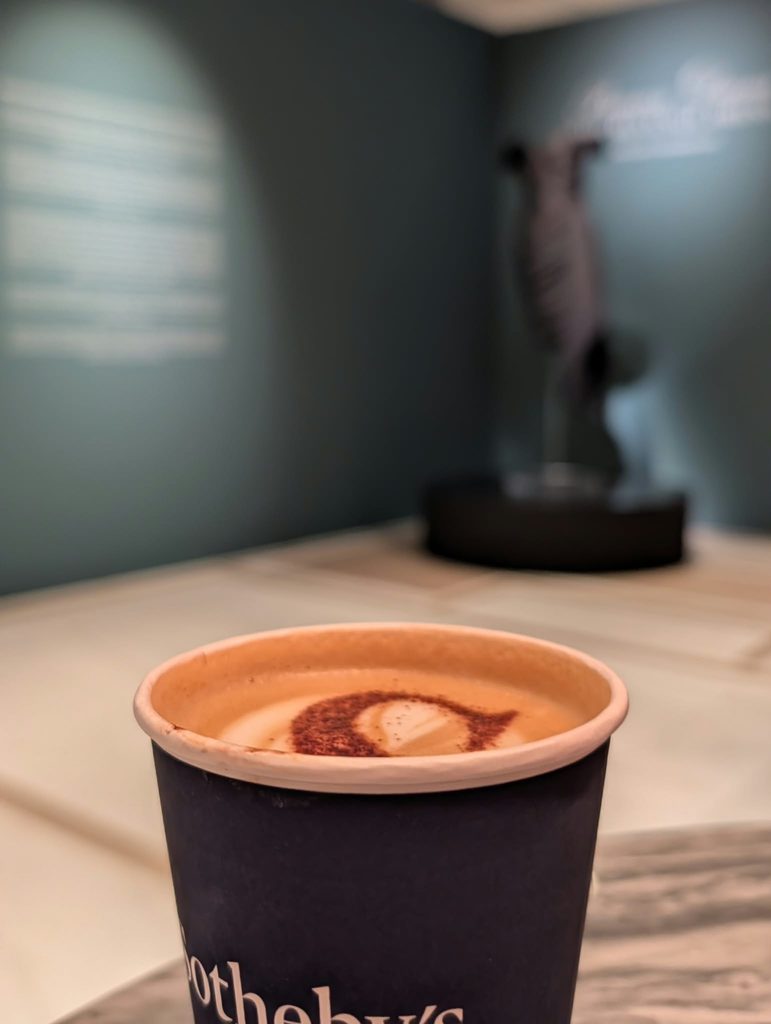
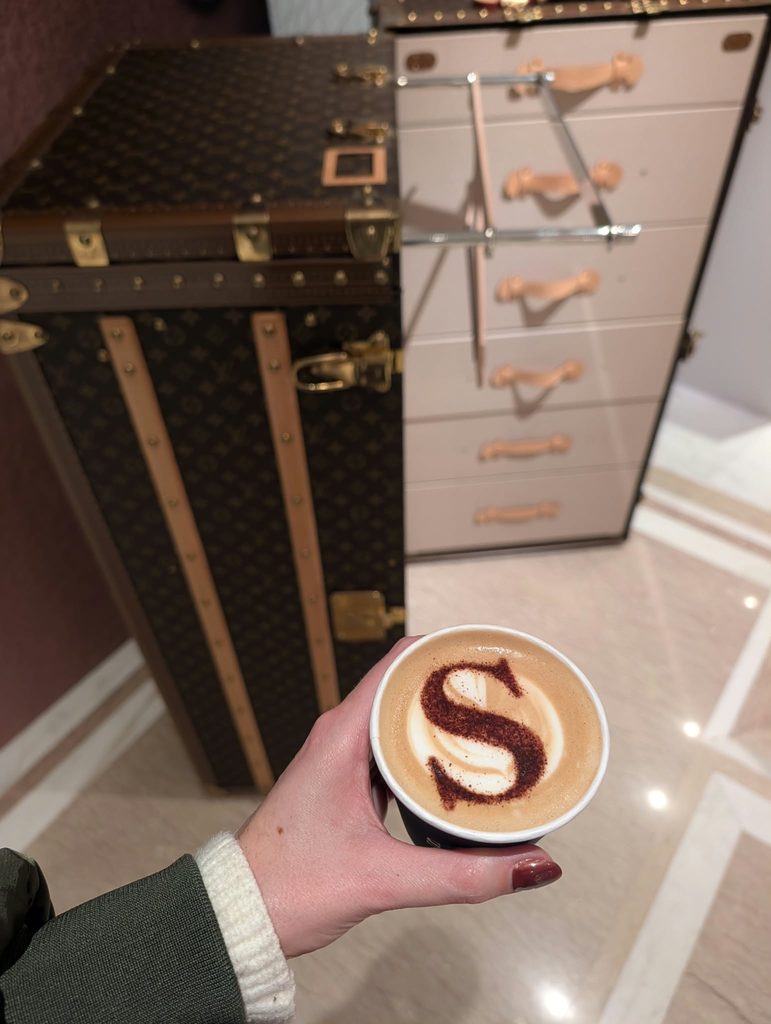
I sipped my coffee at a corner table, staying far longer than I’d planned, writing, the dress fluttering eerily as if someone were still wearing it. I watched mothers lift their babies out of strollers to pose beside Diana’s dress. “You don’t know who she is, but this is history,” one mother told her infant son, snapping a photo of his nonchalant face.
As the minutes passed, I began to feel at ease in Sotheby’s, unbothered by the crisp suits and the buyers seriously considering bidding on handbags worth twice my retirement savings.
Perhaps that is the lesson of the revenge dress: confidence is a state of mind, one that you can wear on your sleeve.